
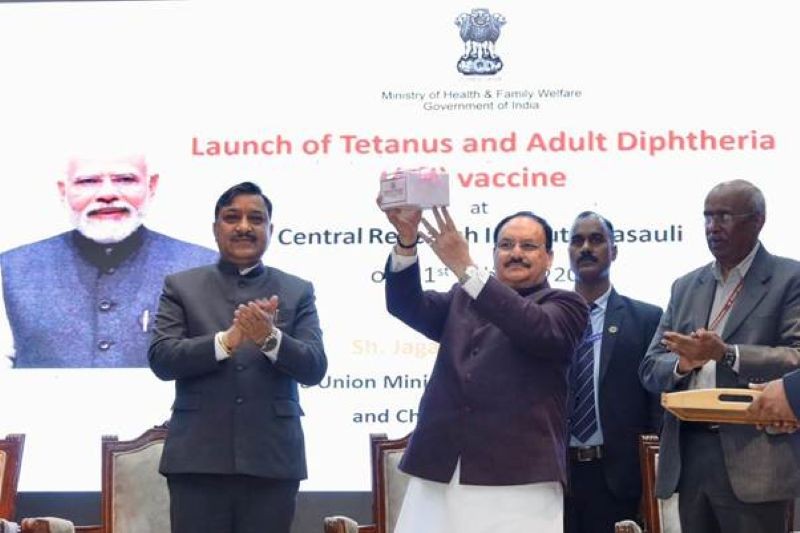
Addressing scientists, technical experts and staff at CRI, Nadda described the launch as a “momentous and historic occasion,” congratulating the institute for strengthening India’s vaccine manufacturing capabilities. He said the development of the indigenous Td vaccine represents a major step toward enhancing national health security and reinforcing the country’s public health infrastructure.
The Minister underscored that under the leadership of Prime Minister Narendra Modi, the government has set clear targets for achieving self-reliance in the health and pharmaceutical sectors. The launch, he noted, aligns with the vision of Atmanirbhar Bharat by reducing dependence on imports and promoting domestic manufacturing.
With its formal rollout, the Td vaccine has been introduced for supply under the Universal Immunization Programme (UIP). CRI will supply 55 lakh doses to the programme by April 2026, with production expected to scale up in subsequent years to further strengthen immunization coverage nationwide.
Highlighting India’s global standing, Nadda said the country is widely recognized as the “pharmacy of the world” and remains among the leading vaccine manufacturers globally. He added that India has achieved Maturity Level 3 under the World Health Organization’s global benchmarking of regulatory systems, reflecting the strength and reliability of its vaccine regulatory framework—an achievement to which institutions like CRI have significantly contributed.
Recalling historical timelines in vaccine and drug development, the Minister noted that tetanus vaccine development took decades globally, tuberculosis medicines evolved over nearly 30 years, and the Japanese Encephalitis vaccine required almost a century of scientific effort.
In contrast, during the COVID-19 pandemic, India developed two indigenous vaccines within nine months and administered over 220 crore doses, including booster shots. He also highlighted the digital delivery of vaccination certificates as an example of India’s transformation in public health governance.
Referring to India’s global outreach during the pandemic, Nadda said that under the Vaccine Maitri initiative, the country supplied vaccines to nearly 100 nations, including free-of-cost supplies to 48 countries. Public sector institutions such as CRI, he added, played a vital role in supporting both domestic requirements and global commitments.
The Minister emphasized that CRI is the first government institute to manufacture vaccines under Good Manufacturing Practices (GMP) standards, reflecting the modernization and revitalization of public sector vaccine manufacturing units.
Union Health Minister @JPNadda Launches Indigenously Manufactured Tetanus & Adult Diphtheria (Td) Vaccine at Central Research Institute, Himachal Pradesh
— PIB India (@PIB_India) February 21, 2026
Union Health Minister Commends Central Research Institute Team; Describes Td Vaccine Introduction as Milestone in Public… pic.twitter.com/hzkMPZTm3y
Describing the UIP as the world’s largest immunization programme, he noted that it currently provides 11 vaccines protecting against 12 vaccine-preventable diseases, with CRI making substantial contributions over the years. Each year, approximately 2 to 2.5 crore children are born in India, with a similar number of women becoming pregnant.
From pregnancy registration onward, beneficiaries are tracked through digital platforms such as U-WIN. Expectant mothers receive five antenatal check-ups, including at least one by a specialist. Immunization and monitoring continue until a child turns 16, covering 27 doses under the programme.
The annual immunization cohort includes nearly 5 crore beneficiaries—around 2.5 crore pregnant women and 2.5 crore children. Due to systematic tracking and sustained immunization drives, vaccine coverage has reached nearly 99 percent, marking what the Minister described as a transformative shift in India’s public health landscape.
Referring to the Ayushman Bharat - Pradhan Mantri Jan Arogya Yojana, Nadda said it is the world’s largest publicly funded health coverage programme, benefitting over 62 crore people. He added that all citizens above 70 years of age, irrespective of socio-economic status, are eligible for health coverage of up to ₹5 lakh per year under the scheme.
The Minister also highlighted improvements in maternal healthcare, noting that institutional deliveries have increased from 79 percent to 89 percent, reflecting expanded access to healthcare facilities and strengthened services nationwide.
Reiterating the government’s commitment to public health, Nadda said sustained policy interventions and institutional strengthening are driving measurable improvements in healthcare delivery and reinforcing India’s national health security framework.