
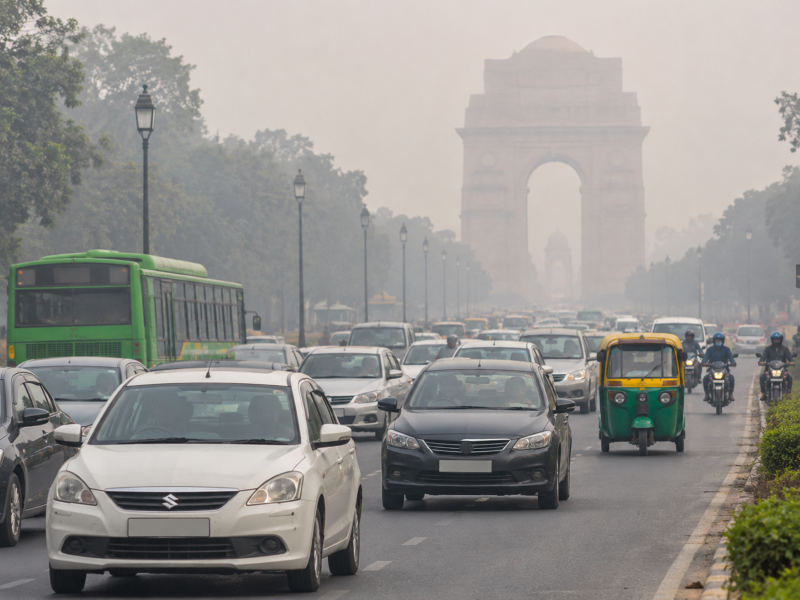
Delhi recorded an average Air Quality Index (AQI) of 324, pushing it into the 'Very Poor' category and triggering additional pollution-control measures.
What does GRAP-II mean for Delhi-NCR?
The implementation of GRAP-II brings a fresh set of restrictions aimed at reducing pollution levels across the region.
The measures include mechanical and vacuum-based road sweeping, regular water sprinkling to control dust, and higher parking fees to discourage the use of private vehicles.
Authorities have also been directed to increase the frequency of Metro services and ensure adequate availability of CNG and electric buses to encourage commuters to switch to public transport.
The restrictions build on the measures already introduced under GRAP-I, which came into force on October 21 when Delhi's AQI stood at 244.
GRAP-I measures include promoting public transport, checking Pollution Under Control (PUC) certificates, and enforcing restrictions on diesel vehicles older than 10 years and petrol vehicles older than 15 years.
The stage also prohibits the use of coal and firewood in roadside eateries and commercial tandoors while placing restrictions on the use of diesel generator sets.
Why is Delhi's pollution worsening?
Delhi typically begins experiencing its annual smog season in early October. However, this year, relatively clean air conditions persisted for longer due to delayed monsoon rains and stronger surface winds.
The situation is now changing as weather conditions become increasingly unfavourable for the dispersal of pollutants.
Experts have also raised concerns about the possible influence of El Niño, a climate phenomenon that disrupts global weather patterns and can contribute to conditions that favour higher pollution levels.
Manoj Kumar, an analyst at the Centre for Research on Energy and Clean Air (CREA), highlighted fluctuations in Delhi's winter pollution levels over recent years.
According to the data cited by him, the mean winter AQI increased from 280 in 2022-23 to 304 in 2023-24. It subsequently declined to 285 in 2024-25 before rising again to 295 in 2025-26.
Stubble burning adds to winter pollution concerns
The annual stubble-burning season in neighbouring Punjab, Haryana and Uttar Pradesh remains another major source of concern for Delhi-NCR.
As farmers clear their fields after harvesting paddy, the burning of crop residue releases smoke and particulate matter that can travel towards the national capital, worsening an already fragile air quality situation.
This year, delayed rainfall has reportedly pushed the harvesting schedule in Punjab and Haryana, shifting the peak stubble-burning period towards late October and November.
The timing is particularly concerning as winter winds generally become weaker during this period, limiting the movement and dispersion of pollutants and allowing smoke to accumulate over the region.
Tougher restrictions may follow if AQI deteriorates
If pollution levels continue to rise, authorities could be forced to implement the more stringent GRAP-III and GRAP-IV measures.
These stages include tighter restrictions on vehicle movement, including curbs on BS-III petrol and BS-IV diesel four-wheelers, along with the possibility of odd-even road rationing under the prescribed conditions.
With Diwali festivities approaching and the peak stubble-burning season underway, Delhi-NCR faces another challenging pollution season.
The effectiveness of the restrictions, along with weather conditions and efforts to control crop-residue burning, will play a crucial role in determining how severe the winter air pollution crisis becomes.