
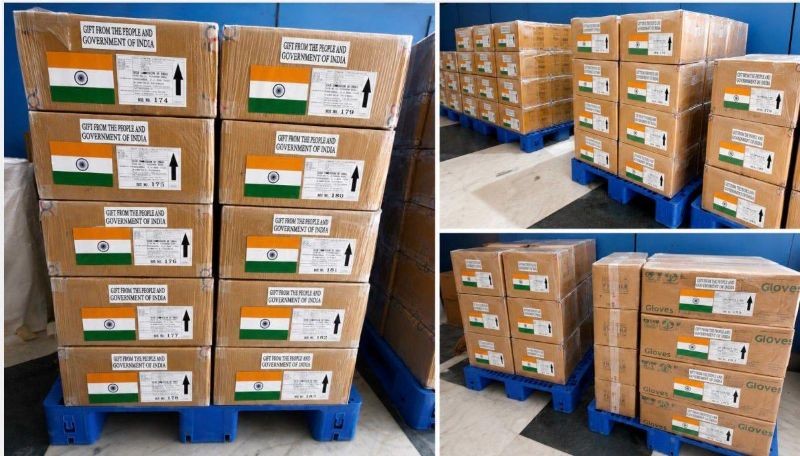
Sharing details of the humanitarian assistance, External Affairs Minister S. Jaishankar wrote on X: “Dispatched the first tranche of urgent medical supplies and protective kits to @AfricaCDC today.”
He added, “Committed to support Africa in responding to the emerging Ebola public health emergency. @AfricanUnion.”
The development comes as World Health Organization (WHO) Director-General Tedros Adhanom Ghebreyesus on Monday confirmed that nearly 900 suspected Ebola cases have been identified in the DRC, including 101 confirmed infections.
Tedros said the epicentre of the outbreak remains Ituri province, home to nearly five million people and a region grappling with persistent armed conflict.
Highlighting the scale of the humanitarian crisis, he wrote on X: “Today, one in four people are in need of humanitarian assistance, and one in five are internally displaced.”
He warned that escalating violence in the region is severely disrupting efforts to contain the outbreak.
🇮🇳 dispatched the first tranche of urgent medical supplies and protective kits to @AfricaCDC today.
— Dr. S. Jaishankar (@DrSJaishankar) May 24, 2026
Committed to support Africa in responding to the emerging Ebola public health emergency. @_AfricanUnion pic.twitter.com/2OHhSARXUY
“The violence is forcing people to flee, including health and humanitarian workers. This is severely impeding efforts to scale up Ebola contact tracing and identify infections early enough to provide supportive care. Ongoing insecurity and fear are also fuelling mistrust within communities,” Tedros said.
Despite the deteriorating security situation, he noted that the WHO and its humanitarian health partners continue to maintain a presence across Ituri, including in some of the hardest-to-reach and most insecure areas.
“Communities are facing not only the threat of Ebola, but also a wide range of diseases,” he added.
The latest Ebola outbreak, coupled with recent hantavirus cases, underscores the world’s continued vulnerability to fast-spreading infectious diseases, Tedros warned earlier on Saturday at the close of the 79th World Health Assembly in Geneva.
His remarks came as Ugandan authorities confirmed three new cases of the Bundibugyo strain of the Ebola virus, for which there is currently neither an approved vaccine nor a specific cure.
The worsening crisis has raised fresh concerns among global health experts, who fear that continued conflict and displacement could further accelerate the spread of the virus across the region.