
The date carries special significance for India as it marks the day the Government of India launched the ‘Bal Vivah Mukt Bharat’ campaign in 2024.
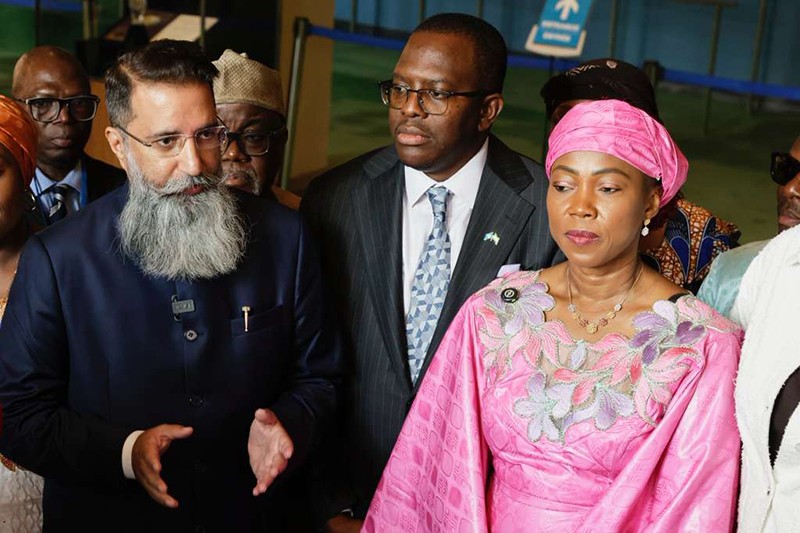
Bhuwan Ribhu, founder of Just Rights for Children (JRC), initiated the international call for a dedicated global day to end child marriage. In March 2026, during his address at the United Nations, Bhuwan Ribhu reiterated the call for a UN resolution in the presence of international leaders, including Dr Fatima Maada Bio, First Lady of African nation Sierra Leone, who also supported the initiative. Subsequently, Sierra Leone, backed by 67 nations, including India, led the effort by presenting a resolution to the United Nations General Assembly seeking to designate November 27 as a global day dedicated to ending child marriage.
On September 4, the United Nations passed the resolution. During the presentation of the resolution at the United Nations, First Lady of Sierra Leone Dr Fatima Maada Bio made a special mention of JRC in the UN Hall.
JRC is one of the world’s largest child protection networks and is leading the Child Marriage Free World campaign to end child marriage through law, accountability and collective action.
JRC works on bringing together all stakeholders responsible for protecting children. In India, its partners work alongside governments and law-enforcement agencies across 782 districts, mobilising communities, schools, panchayats, women, faith leaders, police, political representatives and vulnerable populations.
Working with 14 partner organisations across 23 districts in West Bengal, JRC has played a key role in preventing 33,262 child marriages in the state over the past three years, as part of a wider effort that has stopped and prevented more than 5,50,000 child marriages in India.
Just Rights for Children founder Bhuwan Ribhu was present with the UN delegation during the adoption of the resolution and was the only civil society representative present.
Welcoming the UN declaration, he said in his immediate reaction, “India is the Vishwaguru of child protection today. The Child Marriage Free India campaign, which started first by the children and communities and was subsequently supported and scaled by the Government, with over 25 crore people coming together and taking a pledge on 27th November 2024, has today become an International Day accepted by the world. It is a moment of great pride for all Indians, and I would like to congratulate and thank the children, the community leaders, the faith leaders, and especially my NGO partners whose hard work and dedication made today possible. I would specifically like to mention and thank the Government of India under the leadership of Prime Minister Narendra Modi and Union Minister for Women and Child Development, Smt Annapurna Devi, for its decisive leadership and commitment. The world is looking at us, and our work has only just begun.”
He further added, “Today marks the tipping point, showing that the end of the crime of child marriage is inevitable and imminent. Now is the time for governments globally to provide decisive leadership to end child marriage by 2030 and ensure education, protection and development of every child to realise their full potential. I am grateful to the First Lady of Sierra Leone for her leadership in championing this cause and would also like to thank 67 countries that cosponsored our resolution.”
The decline in child marriage is also reflected in West Bengal’s data. According to the 2019-21 National Family Health Survey (NFHS-5), 41.6% of women aged 20-24 in the state were married before the age of 18. This figure declined to 36.4% in the state according to NFHS-6 (2023-24), compared to 20.1% at the national level. The Government of India has set a target of reducing the prevalence of child marriage in the country by 10% by 2026. With continued efforts at the national and state levels, the prevalence of child marriage in India is expected to fall below 15% by the end of 2026. This progress contributes to the global commitment to eliminate child marriage by 2030, in line with Target 5.3 of the Sustainable Development Goal 5 (Gender Equality), which calls for the elimination of all harmful practices, including child, early and forced marriage.