
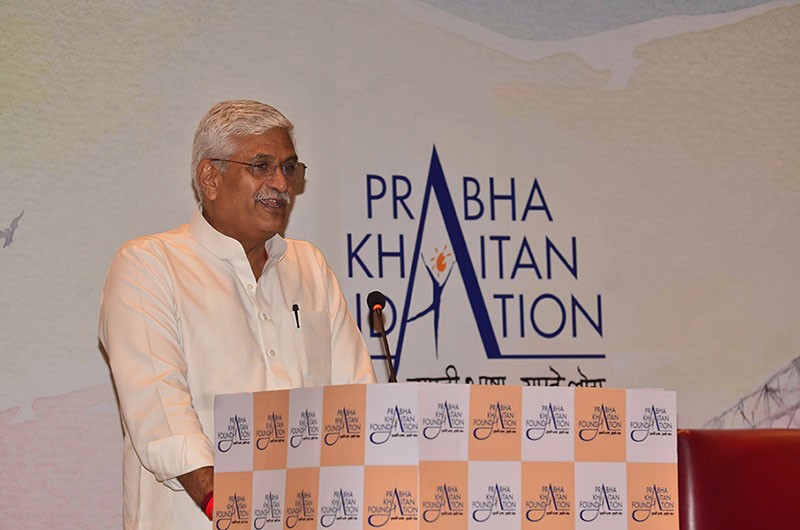
Addressing a session of Ek Mulakat in Kolkata, Union Minister of Culture and Tourism, Gajendra Singh Shekhawat, lauded the enduring contribution of Late Prabha Khaitan in awakening social awareness, and praised the multifarious socio-cultural work of the Prabha Khaitan Foundation — calling it "an important name" among organisations that quietly do what governments cannot.
Among those who attended the session were Padma Shri awardees dancer Mamata Shankar, Baul maestro Pt. Purna Das Baul and classical musician Tejendra Narayan Majumdar, along with Padma Bhushan awardee singer Usha Uthup and Sundeep Bhutoria, Trustee, Prabha Khaitan Foundation — a guest list that read like a who's who of Bengal's cultural soul. Art, literature, cinema, music, theatre and social service were all represented in a room rich with distinguished personalities including representatives of foreign consuls.
"Prabha ji laid the basis of the Foundation with the aim of awakening social consciousness, and through continuous, meaningful and active efforts it is playing a vital role in preserving and protecting India's cultural identity and heritage.
"The contribution of the Prabha Khaitan Foundation towards giving new dimensions to the diverse forms of culture and art in the nation's development is also remarkable," Shekhawat said.
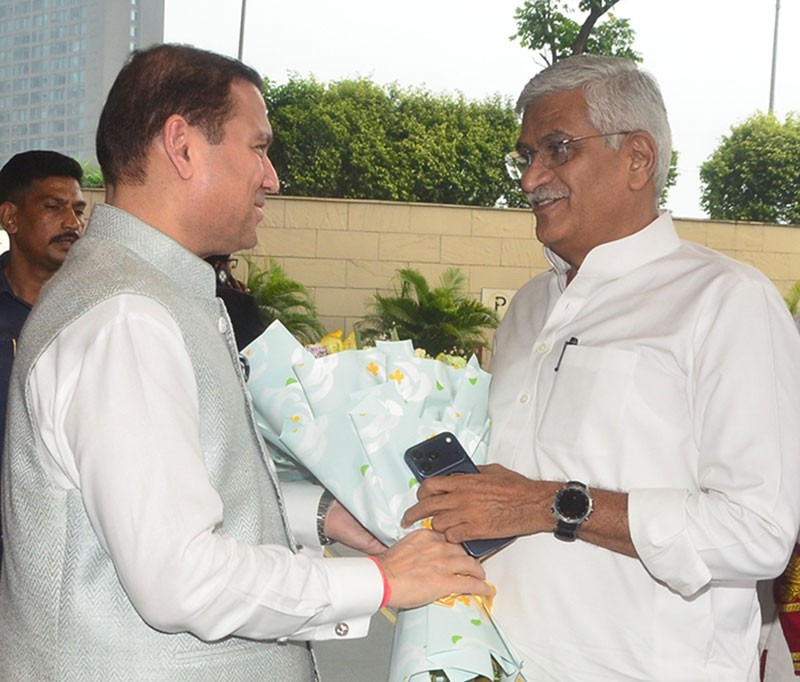 Sundeep Bhutoria (L) and Gajendra Singh Shekhawat (R). Photo: PKF
He said that the institution founded by Prabha Khaitan ji with the aim of awakening social consciousness is today doing commendable work in continuously nurturing India's cultural and literary heritage. Alongside the preservation of literature, art, music, folk art and artists, the Foundation is also consistently active in various areas of social concern.
Shekhawat said that the diverse forms of art make human beings sensitive. People associated with the cultural world have played an important role in the way India is moving forward on the path of development.
Art, culture and creative expression have not only made society more sensitive, but have also contributed significantly to establishing India's identity on the world stage.
He said that India's rich cultural tradition has played a central role in making India what it is. Today, as India moves towards an important role in the world, the responsibility of those associated with the cultural world becomes even more significant.
He said that global leadership is possible not only on the basis of economic, political, technological or strategic power, but also on a cultural basis. India's diversity, its traditions, art, music, literature and folk cultures are its great strengths.
Citing the example of the Louvre Museum in France, he said that it is one of the most famous museums in the world. In the same way, India too is moving towards presenting its civilizational journey of thousands of years to the world through the 'Yuge Yugeen Bharat National Museum' in New Delhi.
The museum will showcase India's civilizational journey of more than ten thousand years. It will not merely be a collection of artefacts, but an effort to present the continuous journey of India's culture, traditions, knowledge, art and worldview.
Shekhawat said that yoga has always been part of India's tradition, but when India's Prime Minister spoke about yoga from the world stage and the international community embraced it, yoga gained a new identity globally. Today the world is listening to India's voice and accepting it. India's cultural richness and strength are being recognised at the global level.
He said that today Sanskrit is being taught in more than 60 universities abroad, and the Vedas in 46 universities. This points to India's knowledge tradition, which has continued uninterrupted for centuries.
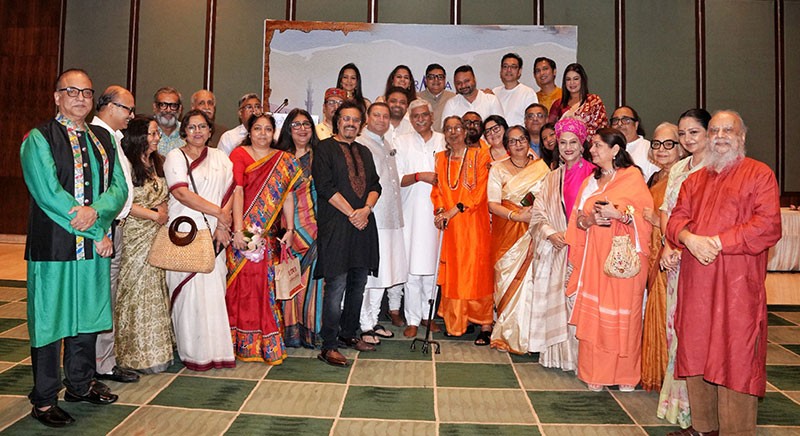 Union Culture Minister Gajendra Singh Shekhawat with Padma awardees and cultural icons at an Ek Mulakat session in Kolkata, celebrating Prabha Khaitan's legacy. Photo: PKF
He also expressed concern over the changes taking place in the family and in the guru–shishya (teacher–disciple) tradition. He said that the institution of the family is declining today and respect for elders has also diminished. Mobile phones and YouTube have taken the place of the guru, which has also affected the sense of reverence towards the teacher.
He said that the cultural treasure we possess today has reached us through an unbroken tradition passed from guru to guru. Today the eyes of the world are on India. In such a situation, if we are to return to our roots and save our families and society from breaking apart, it is possible only through our culture.
Shekhawat said that in olden times, kings and maharajas provided patronage to artists so that they could devote their time to art with complete dedication. Without such patronage, most of an artist's time would have been spent meeting the needs of daily life.
He said that the circumstances after Independence were different. At that time the country faced more basic needs, and the government's priorities were set accordingly. But times have now changed. India's image on the world stage has grown stronger, and there is now a need for large-scale work for the development of the cultural sector.
He said that the government can develop cultural infrastructure, but to make it vibrant and effective, the participation of artists and artisans—small and big, new and senior—will be essential. Only the collective participation of all can make India truly India, because India's real strength lies in its diversity, art, culture and rich cultural heritage. It is the responsibility of all of us to safeguard this heritage and pass it on to future generations.
Prabha Khaitan Foundation's Managing Trustee, Mr Sundeep Bhutoria, said that the Foundation is continuously working for the preservation and promotion of literature, art, folk art and folk languages, as well as of artists. He said that through today's programme, the artists of Bengal got an opportunity for an intimate dialogue with Union Culture Minister Gajendra Singh Shekhawat, and they warmly shared their thoughts and experiences together. They all also expressed their faith in and commitment to the cultural development of the country.
Esha Dutta of Ehsaas Women delivered the welcome address at the programme.
Shefali Rawat Agarwal gave a brief overview of the work of the Prabha Khaitan Foundation.
On this special occasion, Odissi dancer and Ehsaas Woman Dona Ganguly and the Foundation's Executive Trustee Anindita Chatterjee presented the Union Minister with an uttariya (ceremonial stole) and a memento. Esha Dutta proposed the vote of thanks at the end of the programme.
Those present at the Ek Mulakat programme included A D Choudhury, Honorary Advisor for Art and Literature of the Prabha Khaitan Foundation; renowned dancer Alokananda Roy; singer and composer Anupam Roy; National Award-winning film directors Arindam Sil and Kaushik Ganguly and others.