
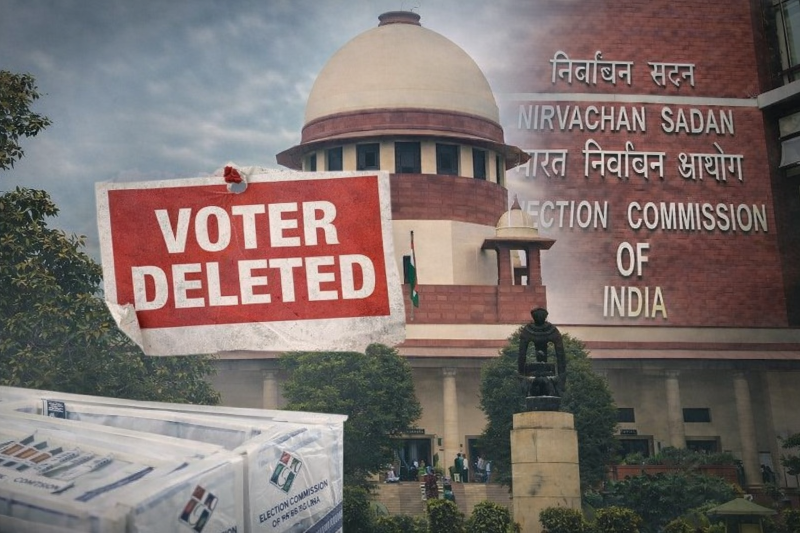
Supreme Court Order in Detail
The top court directed that all deleted voters cleared by the appellate tribunal till April 21 will be allowed to vote in the first phase of polling on April 23.
Similarly, voters whose names are restored by the tribunal till April 27 will be permitted to vote in the second and final phase on April 29.
However, voters not cleared within the stipulated timeline will not be eligible to vote in this year’s Assembly elections.
The Supreme Court passed the order invoking Article 142 of the Constitution, which empowers it to pass directions to ensure “complete justice” in any matter before it.
Why were they not allowed to vote earlier?
They were not allowed to vote earlier because the voter list had been frozen by the Election Commission of India (ECI) ahead of the elections.
As per ECI norms, the electoral roll is locked on specific cut-off dates (April 6 and April 9 in this case) to ensure a final, error-free list for polling.
Once the list is frozen, no new names can be added or deleted, except under specific legal or court directions.
This meant that even if voters were later cleared or restored through tribunal proceedings, their names could not automatically be included in the roll because the revision process had already been halted for election preparation.
The Supreme Court’s intervention created a limited exception, allowing voters cleared within defined deadlines to still be included for voting in the upcoming phases.
Scale of Voter Deletions
Nearly 91 lakh voters have been removed from the electoral rolls during the Special Summary Revision (SIR) exercise.
Over 27 lakh names were deleted from 60 lakh adjudicated cases
An additional 63 lakh names had already been removed earlier
The Supreme Court had earlier directed the formation of appellate tribunals to hear appeals against voter deletions.
The Supreme Court’s intervention created a limited exception, allowing voters cleared within defined deadlines to still be included for voting in the upcoming phases.
Scale of Voter Deletions
Nearly 91 lakh voters have been removed from the electoral rolls during the Special Summary Revision (SIR) exercise.
Over 27 lakh names were deleted from 60 lakh adjudicated cases
An additional 63 lakh names had already been removed earlier
Murshidabad, a Muslim-majority district, recorded the highest deletions, with around 4.5 lakh names struck off from 11 lakh adjudicated cases
What It Means for Voters
The Supreme Court had earlier directed the formation of appellate tribunals to hear appeals against voter deletions.
However, these hearings are unlikely to conclude before polling begins.
Why It Matters
West Bengal is among five poll-bound states where the SIR exercise is underway—the first large-scale revision since 2002.
With elections just days away, the deletion of nearly 91 lakh voters could have significantly impacted electoral strategies and outcomes across the state.
- Phase 1 polling: April 23
- Phase 2 polling: April 29
Why It Matters
West Bengal is among five poll-bound states where the SIR exercise is underway—the first large-scale revision since 2002.
With elections just days away, the deletion of nearly 91 lakh voters could have significantly impacted electoral strategies and outcomes across the state.