
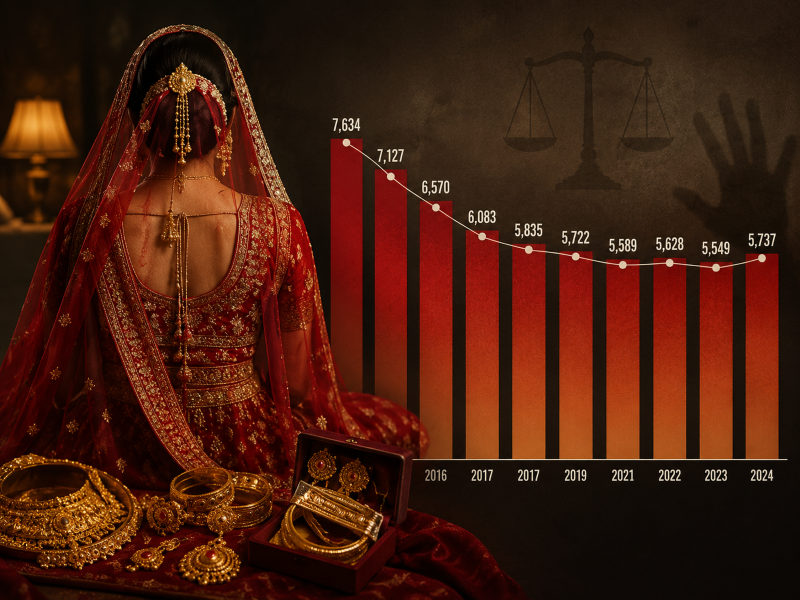
Over 15 Dowry deaths every day in India
According to NCRB data, India recorded 5,737 dowry deaths in 2024.
The figure marks a decline from 7,634 cases reported in 2015, indicating a gradual drop over the past decade.
However, the numbers still translate to more than 15 women dying every day due to dowry-linked violence.
The data suggests that while the trend may be downward, the practice remains deeply entrenched across several parts of the country.
Uttar Pradesh tops the list
A handful of states accounted for a disproportionately high share of dowry deaths in 2024.
- Uttar Pradesh recorded 2,038 cases — over one-third of the national total
- Bihar reported 1,078 deaths
- Madhya Pradesh saw 450 cases
- Rajasthan recorded 386
- West Bengal registered 337 cases
The concentration of cases in these states points to the continuing social acceptance of dowry demands and related abuse in many regions.
Direct dowry murders also reported
Apart from suicides and suspicious deaths linked to harassment, NCRB data also tracks cases classified as “dowry murders” — incidents involving direct fatal violence.
In 2024:
- West Bengal reported 163 dowry murder cases
- Odisha recorded 161
- Rajasthan saw 75
- Bihar reported 66
- Uttar Pradesh registered 58
Over 1.2 lakh cruelty cases registered
The broader picture is reflected in the number of cases filed under “cruelty by husband or relatives”.
India recorded more than 1.20 lakh such cases in 2024, continuing a pattern that has persisted for years with annual figures consistently remaining above one lakh.
States reporting the highest numbers largely mirrored the dowry death data:
- Uttar Pradesh registered over 21,000 cases
- West Bengal recorded more than 19,000
- Rajasthan, Maharashtra and Telangana each reported over 10,000 cases
Thousands of cases still pending
NCRB figures also reveal significant delays in the legal process under the Dowry Prohibition Act.
For years, the pendency rate of cases has remained between 30% and 40%. In 2024 alone, nearly 37% of registered cases were still pending investigation or trial.
The persistently high backlog suggests that while complaints are being filed, many victims and families continue to wait for justice.