
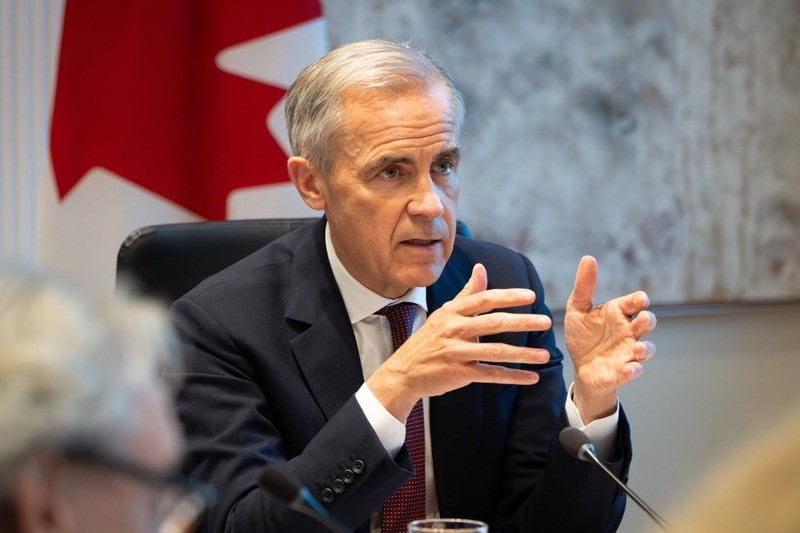
Prime Minister Mark Carney and European Commission President Ursula von der Leyen, co-chairs of the alliance, announced their own pledges at the launch: the EU committed €92 million to ocean observation activities, while Canada pledged $82 million over five years to expand its ocean observation capacity.
Altogether, participating countries contributed the equivalent of about €211 million through a mix of funding, in-kind support and assets such as research vessels, sensors, drones and data-processing facilities.
The event, organized with the Intergovernmental Oceanographic Commission of UNESCO and the World Meteorological Organization, GOOS's two co-sponsoring bodies, drew heads of state and government along with ministers and other stakeholders.
Thirty-one members joined the alliance at launch, including Canada, the EU and 29 countries spanning Africa, Latin America, Europe, Asia and the Pacific.
GOOS currently delivers about 120,000 observations a day from 8,000 platforms operated by 64 countries and 17 global observation networks, data used for weather forecasting, climate projections, maritime safety, coastal protection and marine biodiversity work.
Organisers said the system remains vulnerable to funding shortfalls and geopolitical disruption because it depends heavily on a small number of major contributors, risking data gaps that could undermine forecasting and conservation efforts worldwide.
The pledges announced Tuesday are intended to maintain existing observation platforms, close critical data gaps, strengthen the GOOS Secretariat and its coordination hubs, and reinforce the OceanOPS data-reporting centre.
"The ocean we share cannot be understood, or protected, by any nation alone," Carney said. "What none of us can do individually, we can achieve together. Every observation shared multiplies impact."
Von der Leyen said ocean observation gives countries "eyes and ears beneath the waves" as ocean conditions change rapidly, adding that the alliance would build "a vital network across the world."
The OceanEye Alliance builds on an initiative the European Commission adopted in June 2026 to expand the EU's role in ocean observation.
Organisers said it is meant to secure long-term funding for GOOS, create a framework for coordinated international action, and support implementation of UN Sustainable Development Goal 14 on life below water, as well as the UN's BBNJ Agreement on marine biodiversity in international waters.
The launch marks the start of a broader international mobilization effort running through 2026-2028, with further pledging opportunities expected at COP31 and the 12th Our Ocean Conference, which Canada will host in Halifax, Nova Scotia, in 2027.