
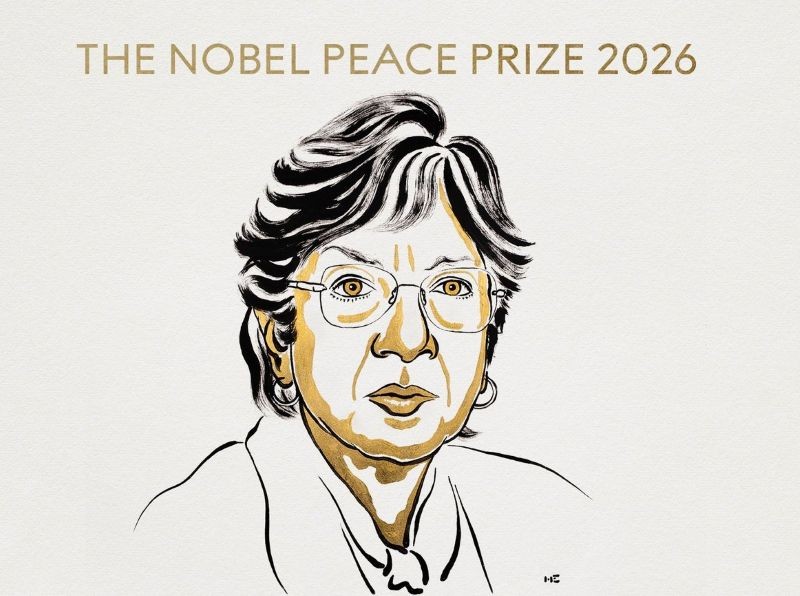
“Navi Pillay’s commitment to universal legal principles and her firm moral compass are constants in a long career,” the committee said.
Born into a family of Indian Tamil origin in Durban, South Africa, during the apartheid era, Pillay became a lawyer and a legal pioneer, challenging systemic discrimination, segregation and exclusion.
A common thread runs through her career, from her early work defending Nelson Mandela and others who fought against apartheid to her role as a judge in some of the most significant international legal cases of our time.
This year’s laureate has significantly expanded the scope and impact of international law.
Pillay has served as a judge on South Africa’s High Court, the International Criminal Tribunal for Rwanda and the International Criminal Court. She has also served as the United Nations High Commissioner for Human Rights and, until recently, chaired the UN Independent International Commission of Inquiry on the Occupied Palestinian Territory.
Pillay is currently serving as a judge at the International Court of Justice in the case in which Myanmar stands accused of genocide. Through her involvement in landmark international legal proceedings, she has demonstrated how legal mechanisms can help prevent war and violence.
She has also played a significant role in strengthening international legal institutions. Her independence, expertise and steadfast commitment to justice have made her one of the most respected international jurists of our time.
The Nobel Peace Prize was the fifth Nobel award announced this week, following the announcements of the prizes in literature, chemistry, physics and medicine.