
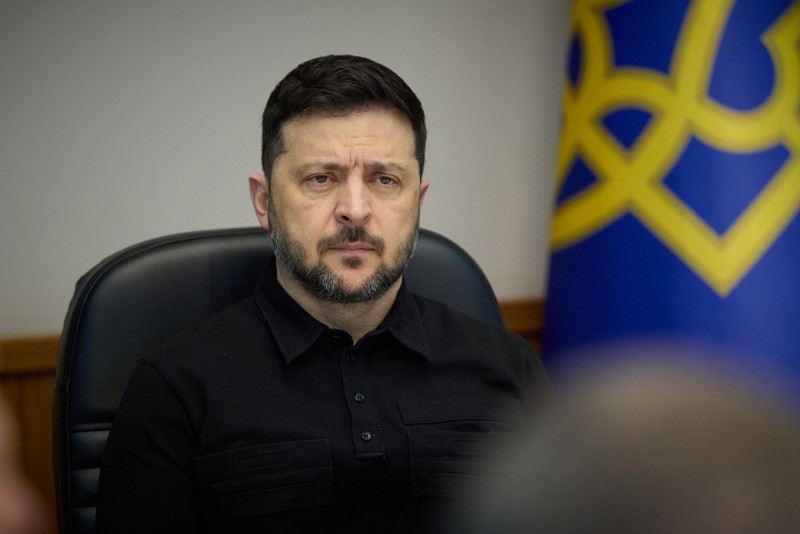
The framework, negotiated with the United States and discussed during high-level talks in Florida and Miami, introduces the possibility of demilitarised zones and free economic zones in eastern Ukraine while firmly reaffirming Kyiv’s sovereignty.
Zelenskyy described the proposal as the “main framework for ending the war,” stressing that it offers security guarantees stronger than earlier drafts and preserves Ukraine’s right to maintain a large standing military.
Demilitarised zones and the Donbas question
At the heart of the plan lies the most contentious issue: territory, particularly in the eastern Donetsk region.
Russia has demanded that Ukrainian forces withdraw from areas Kyiv still controls, while Ukraine insists fighting should halt along the current front lines.
Zelenskyy revealed that U.S. negotiators are exploring the creation of demilitarised or free economic zones in the parts of Donetsk still held by Ukraine.
Under the proposal, Ukrainian heavy forces could pull back by distances ranging from five to 40 kilometres, provided Russian troops mirror those withdrawals.
Any such zone, Zelenskyy stressed, would remain under Ukrainian administration and policing, with international forces deployed along the contact line to prevent infiltration.
Security guarantees and a strong Ukrainian military
A central pillar of the framework is the promise of robust security guarantees from the United States, NATO, and European allies.
These guarantees would mirror NATO’s Article 5, committing partners to a coordinated military response in the event of renewed Russian aggression.
Crucially, the proposal allows Ukraine to retain a peacetime military strength of up to 800,000 personnel, rejecting earlier U.S. suggestions that Kyiv reduce its armed forces.
Zaporizhzhia nuclear plant remains unresolved
One of the few unresolved points is the future of the Zaporizhzhia nuclear power plant, Europe’s largest, currently under Russian occupation.
Zelenskyy confirmed that Kyiv has rejected a U.S. proposal for joint operation involving Russia, instead advocating a Ukraine–U.S. partnership without Moscow’s involvement.
The plan also calls for demilitarised zones around the plant and Russian troop withdrawals from several other regions, including Kharkiv, Sumy, Mykolaiv, and Dnipropetrovsk.
EU membership, investment, and economic recovery
Beyond security, the framework outlines Ukraine’s long-term integration into Europe.
It proposes EU membership with a defined accession date, preferential market access, and the creation of multiple recovery and reconstruction funds.
Combined investment initiatives involving the U.S. and Europe could mobilise up to $800 billion, aimed at rebuilding infrastructure, supporting humanitarian recovery, and boosting long-term economic growth.
Elections, ceasefire, and enforcement mechanism
The proposal stipulates that Ukraine must hold elections as soon as possible after a peace agreement is signed, despite the country currently being under martial law.
Once all parties approve the agreement, a full and immediate ceasefire would take effect.
Implementation would be monitored by a Peace Council chaired by U.S. President Donald Trump, with sanctions automatically triggered in the event of violations.
Russia’s likely response remains uncertain
While Zelenskyy says the plan narrows differences with Washington, Moscow’s reaction remains unclear.
Russian President Vladimir Putin has previously warned that Russia would seize all of eastern Ukraine by force if Kyiv refuses territorial concessions.
For now, the proposal represents Ukraine’s most detailed attempt yet to balance territorial integrity, military strength, and international guarantees—without conceding sovereignty.