
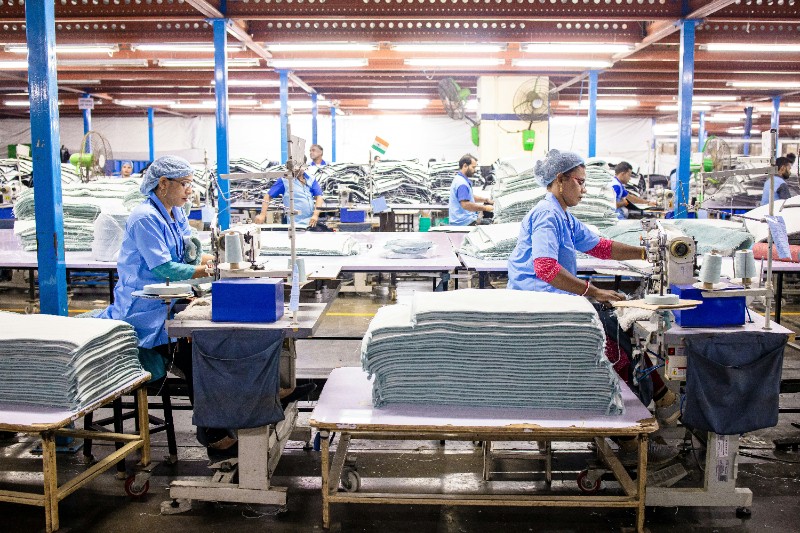
The relocation comes as Bangladesh’s garment industry grapples with labour unrest, production disruptions, energy shortages and rising manufacturing costs, prompting international buyers to reassess their sourcing strategies and seek more reliable alternatives.
Indian manufacturers have gained from the shift, while Vietnam, Cambodia and Indonesia are also attracting interest from global apparel companies seeking to diversify their supply chains and reduce dependence on a single manufacturing hub.
India gains from sourcing shift
India has emerged as the largest beneficiary of the order transfers, supported by its established textile and apparel manufacturing base and a broad network of suppliers.
The changing sourcing landscape has created opportunities for Indian manufacturers to secure a larger share of international orders as global brands seek competitive production costs, dependable manufacturing capacity and timely deliveries.
The Reuters report said Indian textile companies also received a boost in the stock market following its publication.
Shares of Gokaldas Exports rose by as much as 11 percent, while Trident gained nearly 5 percent.
However, India is not the only alternative attracting international buyers.
Vietnam, Cambodia and Indonesia are also emerging as destinations for companies looking to spread production across multiple countries and limit exposure to supply-chain disruptions.
Bangladesh faces mounting pressures
Bangladesh, one of the world's major garment-exporting countries, has faced growing difficulties in maintaining production and meeting international orders.
Labour unrest and factory-level disruptions have affected manufacturing operations, while energy shortages and rising costs have added to the pressure on exporters.
These challenges have prompted global apparel brands to move orders to alternative suppliers to protect production schedules and ensure timely deliveries.
Industry executives told Reuters that buyers were increasingly concerned about the risks associated with relying heavily on Bangladesh for garment production.
Factory owners have also expressed concern that some international buyers could maintain relationships with alternative suppliers even after conditions in Bangladesh improve, potentially making the shift more permanent.
The garment sector remains Bangladesh's largest export-earning industry, making international orders a significant concern for the country's export economy.
Wage revision adds cost concerns
Bangladesh's decision to approve a 36 percent increase in the minimum wage for garment workers has added another dimension to the industry's cost pressures.
The revision, approved on Wednesday, was described as the smallest wage increase in four decades.
While the adjustment addresses workers' income requirements, it also comes at a time when manufacturers are already dealing with higher operating expenses and uncertainty over production.
The wage decision has intensified the debate over how Bangladesh can balance workers' earnings with the cost competitiveness of its export-oriented garment industry.
For international buyers, manufacturing costs remain an important consideration, alongside production reliability, quality standards and delivery schedules.
The latest developments have encouraged companies to examine sourcing options beyond their traditional manufacturing locations.
Global brands diversify suppliers
The movement of orders reflects a broader change in the sourcing strategies of international apparel companies, which are increasingly adopting multi-country manufacturing arrangements.
Rather than depending excessively on one major production centre, buyers are exploring several Asian destinations to reduce supply-chain risks and maintain greater flexibility when disruptions affect manufacturing.
India's established supplier network has helped it benefit from this shift, while other regional manufacturing centres are also competing for orders.
Reuters reported that Inditex, the parent company of Zara, declined to respond to its questions. M&S, H&M and Celio did not respond to requests for comment.