
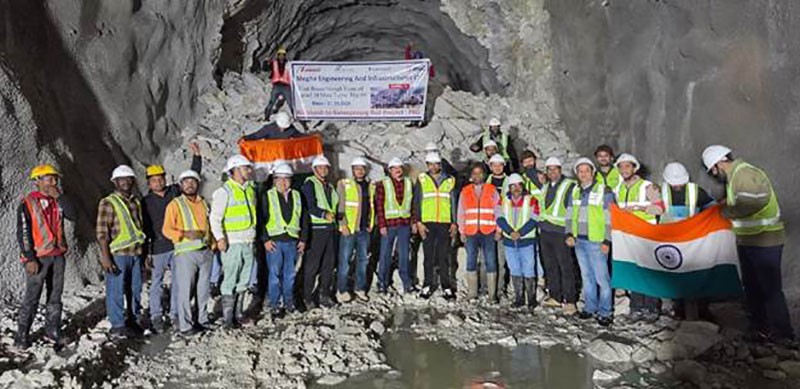
The breakthrough connects two excavated sections of the tunnel, comprising a 4.7-km stretch from Portal-1 (Sumerpur) and a 1.79-km stretch from Portal-2 (Marora).
At Portal-1 (T14P1), engineers excavated a 110-metre stretch of the triple-track tunnel through loose soil beneath inhabited areas, with only 20-30 metres of soil and rock cover above it. Specialised techniques, including pre-excavation and multi-drifting, were employed to ensure safe excavation under challenging geological conditions.
At Portal-2 (T14P2), the slope was stabilised using 30-35-metre-deep micropiles, 15-20-metre-long rock bolts and consolidation grouting. These measures paved the way for the launch of the main tunnel excavation in March 2024, following the resolution of ground settlement issues in Marora and matters related to land and house acquisition.
Around 100 metres of mechanical excavation was also carried out at Portal-2. To safeguard nearby settlements, controlled blasting operations were conducted strictly during daytime hours near both portals.
Specialised ventilation systems were deployed throughout the 4.7-km excavation drive from Portal-1 to ensure an adequate supply of fresh air and regulate temperatures inside the tunnel.
The breakthrough marks a significant milestone in the construction of the Rishikesh-Karnaprayag Rail Project, a major railway infrastructure initiative aimed at strengthening connectivity to the hill regions of Uttarakhand.
Once completed, the project is expected to improve rail connectivity, facilitate travel for pilgrims and tourists, and support regional development by providing better access to key destinations across the state.