
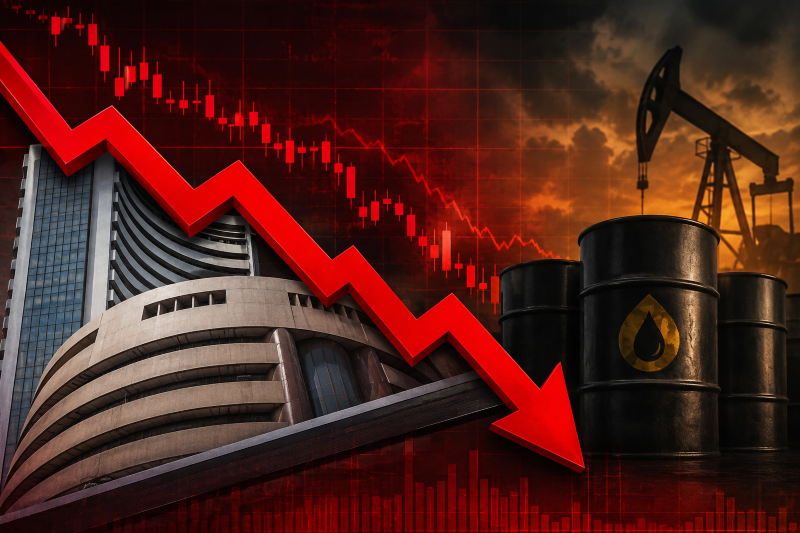
The benchmark BSE Sensex plunged nearly 700 points in the opening minutes, while the NSE Nifty 50 slipped below the psychologically important 24,000-mark.
The sell-off reflected heightened investor concerns over the potential impact of rising energy prices on India's economy, which remains heavily dependent on crude oil imports.
Sensex, Nifty under pressure
The Sensex fell sharply at the opening bell before recovering some ground during the early session. It was still trading more than 500 points lower after the initial recovery.
The Nifty 50 also remained below the 24,000 level, with Reuters reporting the index at around 23,841.40, down 0.89%, while the Sensex was at approximately 76,333.20, down 0.79%.
The broader market also witnessed selling pressure, with mid-cap and small-cap stocks declining as investors turned cautious amid heightened global uncertainty. All 16 major sectors were reported to be trading in the red in early trade.
Crude oil surges
The immediate trigger for the market sell-off was a sharp rise in crude oil prices following renewed US-Iran military strikes.
Brent crude rose towards the $96-per-barrel mark after gaining more than $4 in the previous session. Brent had climbed to a five-week high as the latest escalation raised fears of disruptions to oil supplies from the Middle East.
The rise in crude prices is particularly significant for India, one of the world's major oil importers. A sustained increase in crude prices could push up the country's import bill, put pressure on the rupee and add to inflationary pressures.
Rupee faces fresh pressure
The surge in oil prices has also raised concerns over the Indian rupee. The currency, which had recently benefited from Reserve Bank of India intervention and increased foreign-currency inflows, is now facing fresh headwinds from higher crude prices and elevated US Treasury yields.
A weaker rupee could further increase the cost of India's crude oil imports, adding to pressure on inflation and corporate margins.
Sectoral impact
Oil-sensitive sectors were among those facing pressure. Oil marketing companies, tyre and paint manufacturers and airlines were particularly vulnerable to higher crude prices because of their exposure to energy costs.
Investors are also keeping a close watch on interest rates, as a prolonged rise in oil prices could fuel inflation and complicate the outlook for monetary policy globally.
The market sell-off came amid a broader global risk-off mood, with Asian equities also declining and bond yields rising as investors assessed the economic fallout from the escalating US-Iran conflict.