
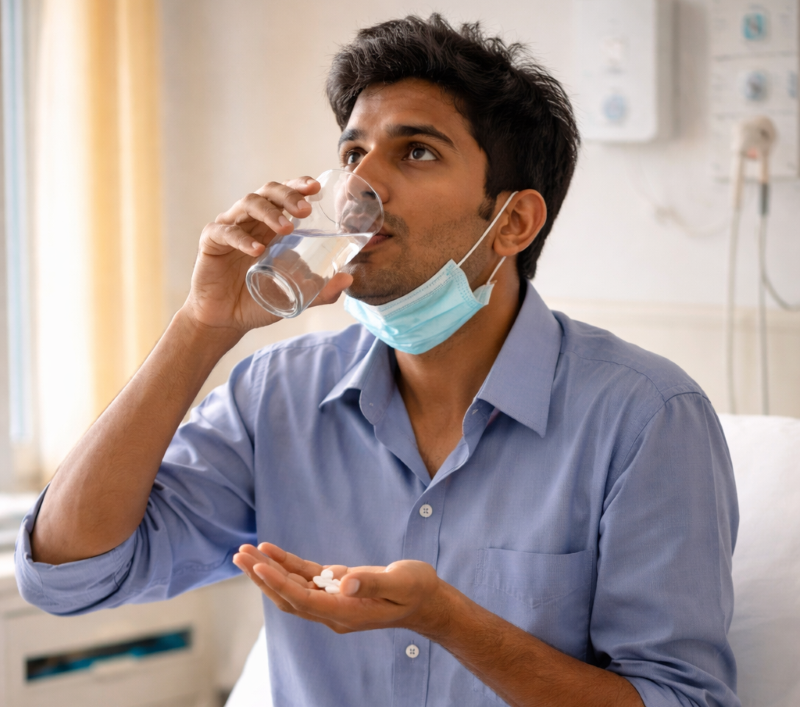
Game-changer for TB patients in India: Shorter oral regimens slash costs, ICMR finds
An economic evaluation published in the Indian Journal of Medical Research has demonstrated that shorter, six-month all-oral treatment regimens for multidrug-resistant and rifampicin-resistant tuberculosis (MDR/RR-TB) are cost-effective and offer improved health outcomes compared to the currently used longer regimens in India.
The study was conducted by ICMR–National Institute for Research in Tuberculosis (ICMR-NIRT). It assessed the cost-effectiveness of bedaquiline-based regimens—BPaL (bedaquiline, pretomanid and linezolid) and BPaLM (with moxifloxacin)—in comparison with the existing bedaquiline-containing shorter (9–11 months) and longer (18–20 months) treatment regimens used under the National TB Elimination Programme (NTEP).
The analysis revealed that the BPaL regimen is both more effective and cost-saving. For each additional Quality Adjusted Life Year (QALY) gained, the health system spends INR 379 less per patient compared to the standard regimen, indicating better health outcomes at lower costs.
The BPaLM regimen was also found to be highly cost-effective, with an additional expenditure of only INR 37 per patient per additional QALY gained compared to the standard regimen. Both regimens were associated with lower or comparable overall healthcare costs, including medicines, hospital visits, and follow-up care.
MDR/RR-TB poses significant treatment challenges due to prolonged treatment duration, adverse effects, and higher costs. Shorter all-oral regimens can improve treatment adherence, reduce patient morbidity, and enable faster return to normal life, while also lowering the burden on the health system.
The findings provide important economic evidence to support the use of shorter, all-oral regimens for MDR/RR-TB management in India. By reducing treatment duration from 9–18 months or longer to six months, these regimens align with national priorities to optimise resource utilisation and accelerate progress towards TB elimination.
The study concludes that BPaL-based regimens are likely to be cost-saving or highly cost-effective and may be considered for programmatic adoption under the NTEP to strengthen India’s response to drug-resistant TB.
IBNS
Senior Staff Reporter at Northeast Herald, covering news from Tripura and Northeast India.
Related Articles

Study shock: Ultra-processed foods may trigger anxiety and aggression in kids
A team led by researchers at the University of Toronto has found an association between ultra-processed foods in early childhood and behavioural and emotional development.

Dementia draws increased attention in Australia in early 2026
Dementia as a major public health issue appears to be receiving growing attention in Australia during the early months of 2026.

‘Toxic Rain’ alert after oil depot strikes as Middle East war intensifies
Toxic “black rain” linked to strikes on oil depots, mass displacement and continuing disruption to aid supply chains are upending lives across the Middle East and beyond after 10 days of war in the region, UN humanitarians said on Tuesday.

Yale study reveals hidden cause of childhood obesity—And it’s not just junk food
In recent years, rates of childhood obesity have been rising, with the U.S. Centers for Disease Control estimating in 2024 that approximately one in five children and adolescents met the clinical definition of obese.
Latest News

Second attack in 24 hours: Dubai building hit by debris after interception

Why were 11 Indians arrested in US? All details about robbery visa fraud case

Trump claims US ‘totally obliterated’ military targets on Iran’s Kharg Island

Blast in Islamabad after drone intercepted as tensions with Afghanistan escalate

