
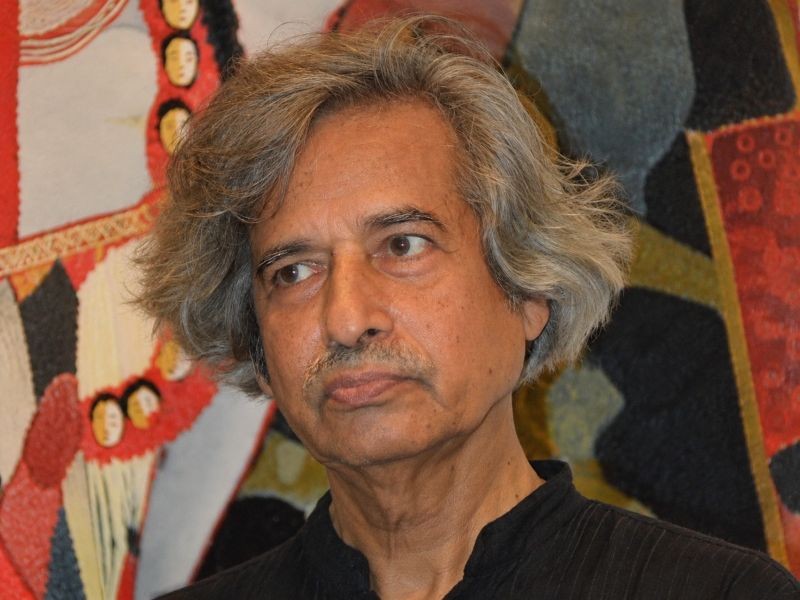
The celebrated painter had been undergoing treatment for blood cancer for over a year and was recently hospitalised after developing a urinary tract infection during Durga Puja.
He was on ventilator support, but doctors could not save him.
Chowdhury's death marks the loss of one of India's most distinctive contemporary artists, whose evocative paintings, satirical depictions of society and politics, and unmistakable visual style earned him national and international recognition.
His demise has cast a pall of grief over the art fraternity, with his contribution to modern Indian art remaining an enduring part of the country's cultural legacy.
From undivided Bengal to the world of art
Born on February 16, 1939, in Daharpara village in Faridpur, in present-day Bangladesh, Chowdhury moved to Kolkata with his family during the Partition of India.
He pursued his artistic education in Kolkata before travelling to Paris in 1965 on a French government scholarship to further his studies in art.
His international exposure helped shape his artistic vision, bringing together influences from Indian and European art movements.
Over the decades, Chowdhury established himself as a leading figure in contemporary Indian painting, developing a distinctive style that set his work apart.
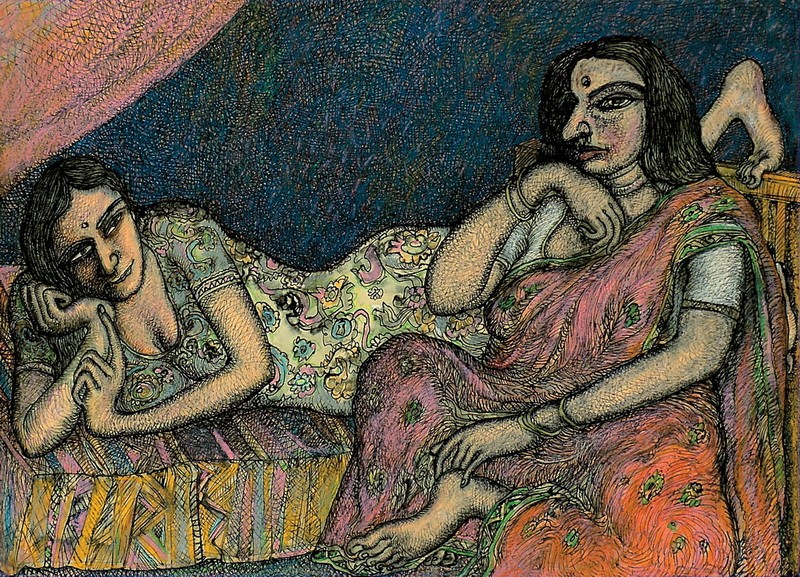 An artwork by Jogen Chowdhury. Photo: jogenchowdhury.net
A distinctive style that captured society and politics
Chowdhury was widely admired for his ability to capture the complexities of human existence through expressive figures, intricate lines and textured compositions.
His works frequently explored the human body, everyday life and the contradictions of society.
He also gained prominence for his satirical depictions of social and political realities, using art to comment on power, human behaviour and the world around him.
His signature visual language, marked by expressive linework and carefully rendered forms, reflected a blend of indigenous artistic traditions and influences from European modernism.
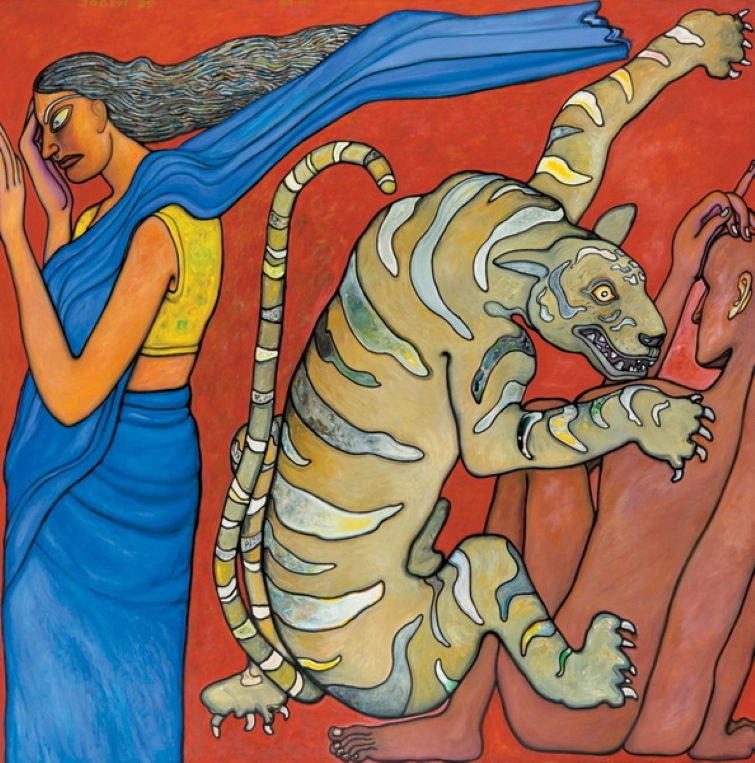 Another piece of art by Jogen Chowdhury. Photo: jogenchowdhury.net
From art teacher to internationally acclaimed painter
Chowdhury began his professional career as an art teacher at Howrah District School. In 1962, he joined the Handloom Board in Kolkata as a designer and later worked as a textile designer in Madras, now Chennai.
His journey subsequently took him to Paris, where he pursued advanced art studies with the support of a French government scholarship in 1965.
He later served as curator of the art gallery at Rashtrapati Bhavan, adding an important institutional dimension to his long association with India's art world.
A childhood shaped by art
Chowdhury's interest in art was nurtured by his family background. His father, Pramathanath Chowdhury, was a zamindar, while his mother was skilled in alpana, the traditional decorative art form practised in Bengal.
Growing up in an environment where artistic expression was familiar helped foster his early inclination towards painting.
That childhood interest eventually grew into a remarkable artistic career spanning decades, during which he became one of the most recognisable names in modern Indian art.
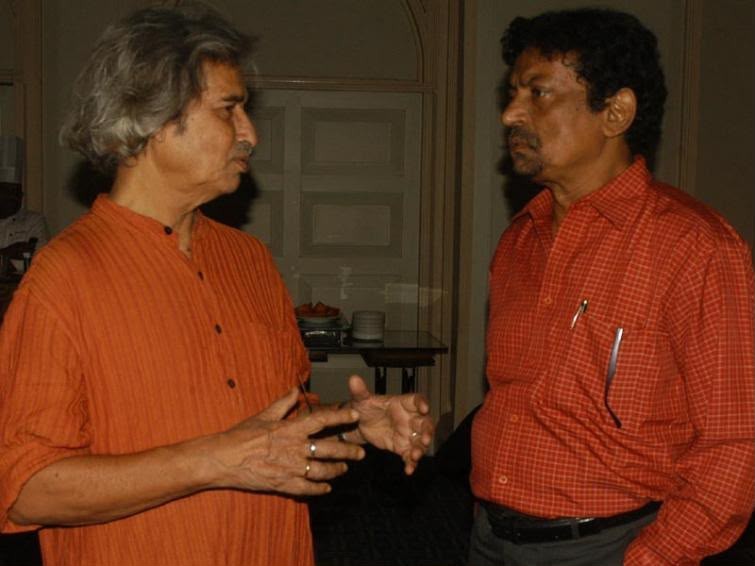 File photo of Jogen Chowdhury with filmmaker Gautam Ghose in 2020. Photo credit: PKF
Art world mourns an irreplaceable voice
Chowdhury's death has left a profound void in the Indian art community. His paintings and distinctive approach to visual storytelling helped shape conversations around contemporary art, society and politics.
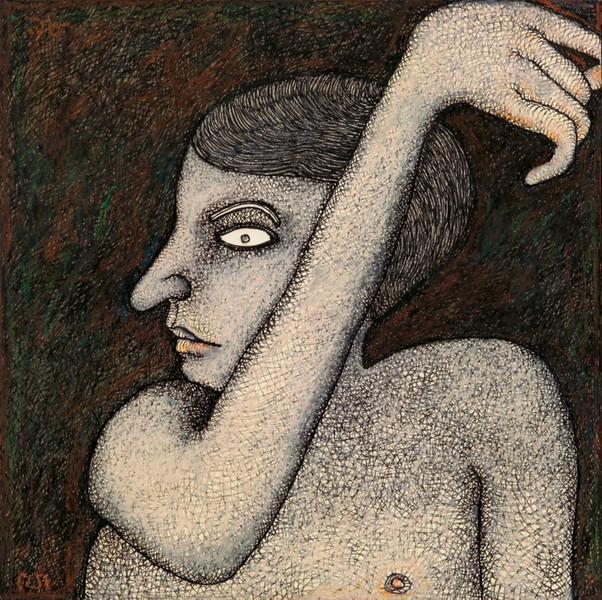 Photo: jogenchowdhury.net
Remembered for his individuality, technical mastery and willingness to engage with uncomfortable realities, he leaves behind a body of work that will continue to inspire artists and art lovers across generations.
Photo credit of all artworks: jogenchowdhury.net