
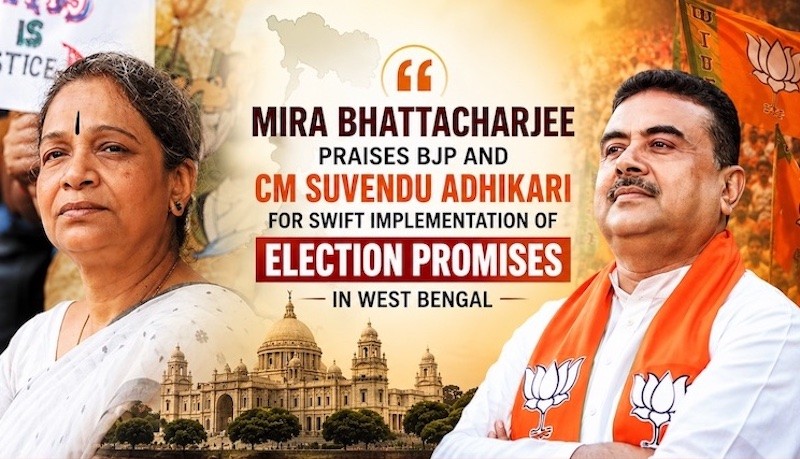
Speaking to Aaj Tak Bangla, she said, “The way the new government has worked within just a few days is highly commendable.”
“I am happy to see that they are implementing their promises so quickly,” she added.
Appreciates welfare measures, including free bus travel for women
Mira Bhattacharjee also appreciated West Bengal Chief Minister Suvendu Adhikari, the first BJP Chief Minister in the state that was ruled by the Left Front for 34 years, for rolling out welfare measures such as free bus travel for women.
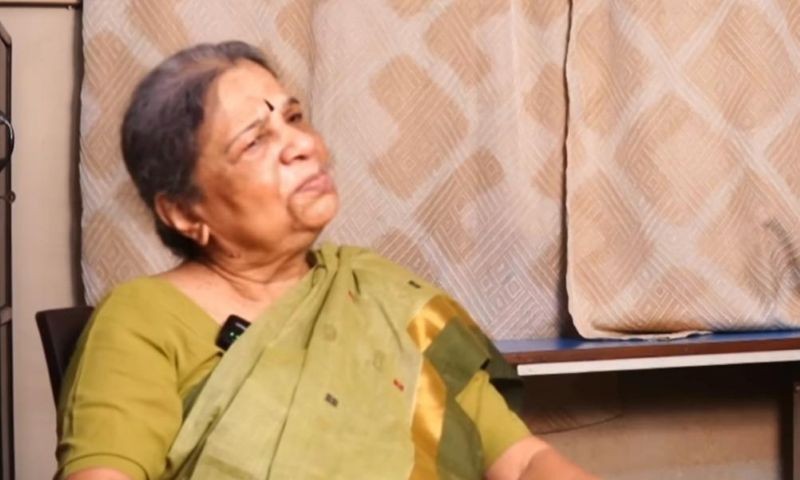 Mira Bhattacharjee praised CM Suvendu Adhikari for the swift implementation of its election promises. Photo: YouTube/ Screengrab
“The new government is making a sincere effort to implement the promises it made before the elections. Anyone who works for the welfare of the state, regardless of political affiliation, deserves our respect,” she said.
Comments on TMC rule and Left Front legacy
Taking a critical view of the Trinamool Congress government that was voted out, she said the Mamata Banerjee-led regime could not be compared with the Left Front era, during which several landmark institutions and infrastructure projects were established in the state.
Singur row still echoes in Bengal politics
She also referred to the Singur movement, saying that many residents now regret opposing the proposed Tata Motors project that was abandoned during the Left regime.
“People of Singur now realise the mistake they made and understand how they were misled at that time. Had the automobile factory been set up, Bengal’s economic landscape would have been transformed,” she said.
BJP pushes for industrial revival, Tata's return to Singur
Recently, West Bengal BJP president Samik Bhattacharya also expressed support for reviving industrial ties with the Tata Group, stating that the party wants Tata to return to Singur to signal that West Bengal is investor-friendly.
“We want the Tatas to come back, and that too in Singur. We want to send a message to the country and the world that West Bengal is open to investment,” he told PTI.
He further said the exit of Tata Motors from Singur significantly damaged Bengal’s industrial image.
“The dismantling of the Tata project sent a wrong message that industries were unwelcome in Bengal. Subsequently, issues such as cut-money culture, syndicate raj and corruption further worsened the situation. We want to correct that perception,” he added.
Buddhadeb Bhattacharjee and the Left Front era
Putting an end to the surge of Congress and later its offshoot Trinamool Congress in West Bengal in late 1990s and early 2000, Bhattacharjee-led Left Front stormed to power in 2006 for the seventh consecutive term with a thumping 235 of 294 seats.
Soon after emerging as a popular leader, Bhattacharjee, whose technique of work was termed as "Brand Buddha" in a section of media, struggled to find his way while launching an industrialisation drive in industry-parched West Bengal.
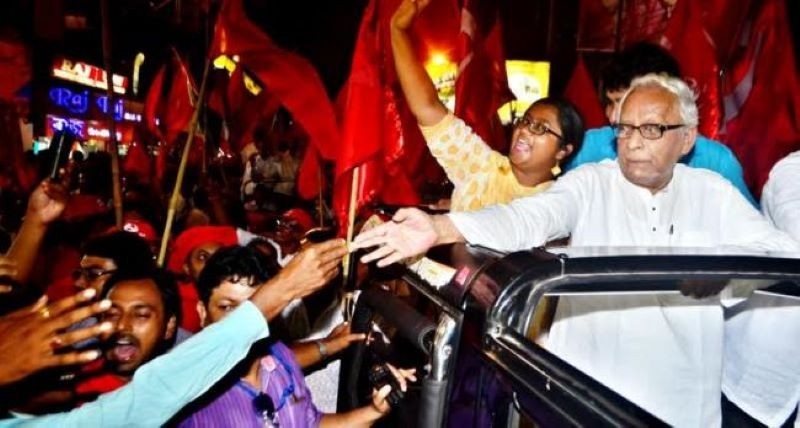 Late Chief Minister Buddhadeb Bhattacharjee gradually stepped back from active politics after left Front's 2011 defeat. Photo: IBNS File
After developing the IT services across the state in the first tenure with "Do It Now" slogan, Bhattacharjee's plan to acquire lands in Singur and Nandigram backfired, catching his government off-guard by the massive protests by farmers, who were obviously backed by then opposition leader and Trinamool chief Mamata Banerjee.
Many claim the 2006 success had got into the head of Bhattacharjee, who had controversially said, "We've 235, they have 30 (We have 235 seats while the Opposition has only 30 seats)."
Facing massive backlash in Singur and police firing in Nandigram killing at least 14 people, the Left Front government, which had already lost its chief strategist Anil Biswas by then, broke down under the pressure.
Though Bhattacharjee had met then Governor Gopal Krishna Gandhi and the opposition leader at Raj Bhavan for a way out, the deadlock was far from any resolution with Bhattacharjee's adversary Mamata Banerjee taking the reign of the farmers' protest.
The face of liberal economy in the state, Bhattacharjee soon crumbled with industrialist Ratan Tata bidding goodbye to the state for Narendra Modi's Gujarat for the Nano car project. The protests had by then created a hole into the Left's votebank.
Post-2011 Political journey of Buddhadeb Bhattacharjee
Following the Left Front’s defeat in 2011, Buddhadeb Bhattacharjee gradually stepped back from active politics, though he later returned to lead the alliance in the 2016 Assembly elections, which ended in another electoral defeat.