
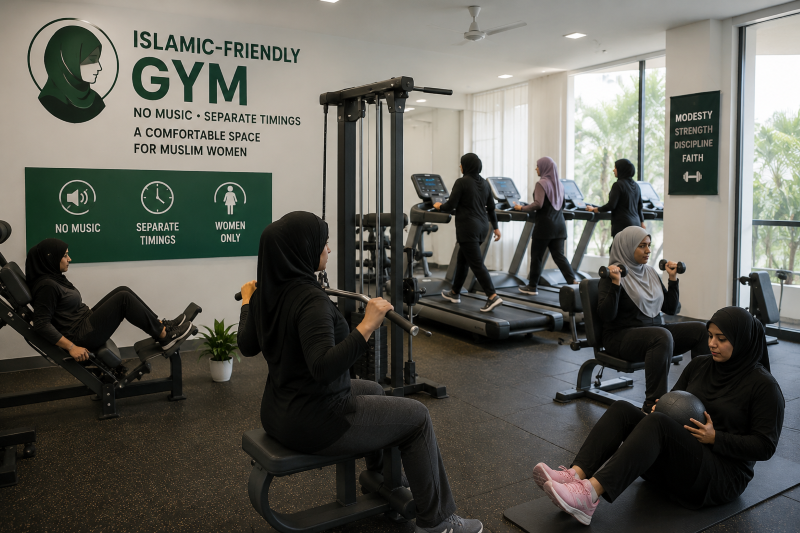
The concept drew sharp reactions online after gym owner Nawaz Muthu T released a promotional video explaining the facility's approach.
Promotional video sparks backlash
In the video, Nawaz said men and women would have separate workout timings and trainers would also be segregated.
The promotional campaign quickly triggered criticism on social media, with several users questioning the idea of branding a fitness centre as "Islamic-friendly".
As the backlash intensified, Nawaz removed the promotional video and issued a clarification, saying the facility was not intended to be a Muslim-only gym.
Owner says gym is open to all
According to reports, the fitness centre is not a new establishment and has been operating for around 15 years. The current exercise is part of a renovation and rebranding effort.
Clarifying his position, Nawaz said the gym aims to accommodate people who follow certain religious and cultural practices and may feel uncomfortable in conventional gym environments.
Catering to specific preferences
The owner said many Muslim women who strictly adhere to Islamic principles avoid gyms because of loud music or mixed-gender workout spaces.
"A lot of Muslims live according to Islamic principles. They don't listen to music. There is no gym for them. When you go to a gym, it is not possible to switch off the music," Nawaz said, as quoted by India Today.
"There are women who are uncomfortable working out in mixed spaces. These are people who have not been able to access gyms until now," he added.
Explaining the rationale behind the initiative, Nawaz said his familiarity with the community helped him identify the need.
"Because I am a Muslim, I know many such people. Even among my relatives, there are people who do not go to gyms. This facility will be useful for them," he said.
Mixed reactions continue
The clarification, however, did little to end the debate.
While some people welcomed the idea of separate workout areas and timings for those seeking greater privacy, others continued to question the use of the term "Islamic-friendly" and its implications in a public-facing business.
The discussion has since evolved into a broader debate on inclusivity, personal choice and the role of religious and cultural preferences in commercial spaces.