
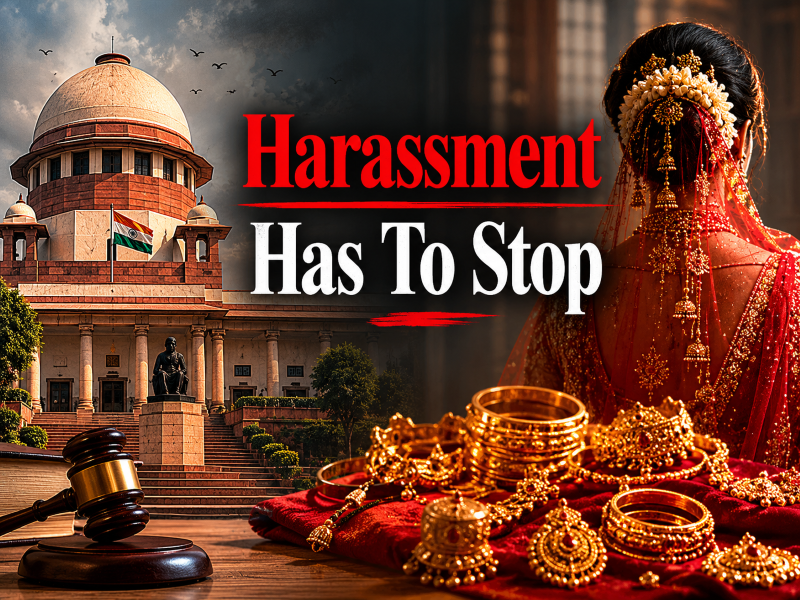
A bench of Justice BV Nagarathna and Justice Ujjal Bhuyan refused to interfere with the conviction of a man under Section 498A of the IPC for cruelty and harassment linked to the death of his sister-in-law.
“The harassment has to stop,” the court said, questioning why brides and their families continue to face humiliation and financial pressure after marriage.
Court questions treatment of brides
The remarks come amid national attention on the death of Twisha Sharma, the 33-year-old woman found dead at her marital home in Bhopal earlier this month. Her family has accused her in-laws of mental torture and harassment.
In the Chhattisgarh case, the woman was found hanging at her matrimonial home in 2010, within three years of marriage.
According to the prosecution, she had been repeatedly harassed over dowry demands that included money and a car.
The trial court convicted several members of the husband’s family under Sections 304B (dowry death), 306 (abetment of suicide), and 498A (cruelty and harassment) of the IPC. The Chhattisgarh High Court later upheld the conviction.
'You should be happy it is only 498A'
During the hearing, the petitioner argued that he had been convicted only under Section 498A and deserved relief.
“You should be happy that it is only 498A and only three years,” Justice Nagarathna remarked sharply.
The bench also highlighted what it called a pattern of financial coercion against brides and their families.
“Attempt is to squeeze the bride and her family,” Justice Nagarathna observed.
Referring to statements on record, the judge said the bride’s family had allegedly been insulted for being unable to meet dowry demands.
“What exactly did the boy’s family say? You people are beggars; you cannot pay. The girl’s family was pleading to save their daughter and they were being called beggars,” the judge said.
When the accused’s lawyer tried to respond, Justice Nagarathna interrupted:
“You should have kept quiet. Bride’s father said they can give Rs 60,000 and you call them beggars?”
Supreme Court dismisses appeal
The petitioner’s counsel also argued there had been a delay in filing the FIR, but the court rejected the contention.
“Let the message go. This is how brides are treated,” the bench said.
Justice Bhuyan also expressed concern that such behaviour persists even among educated families.
“These are educated people,” he remarked.
The Supreme Court ultimately upheld the findings of the lower courts and dismissed the appeal.