
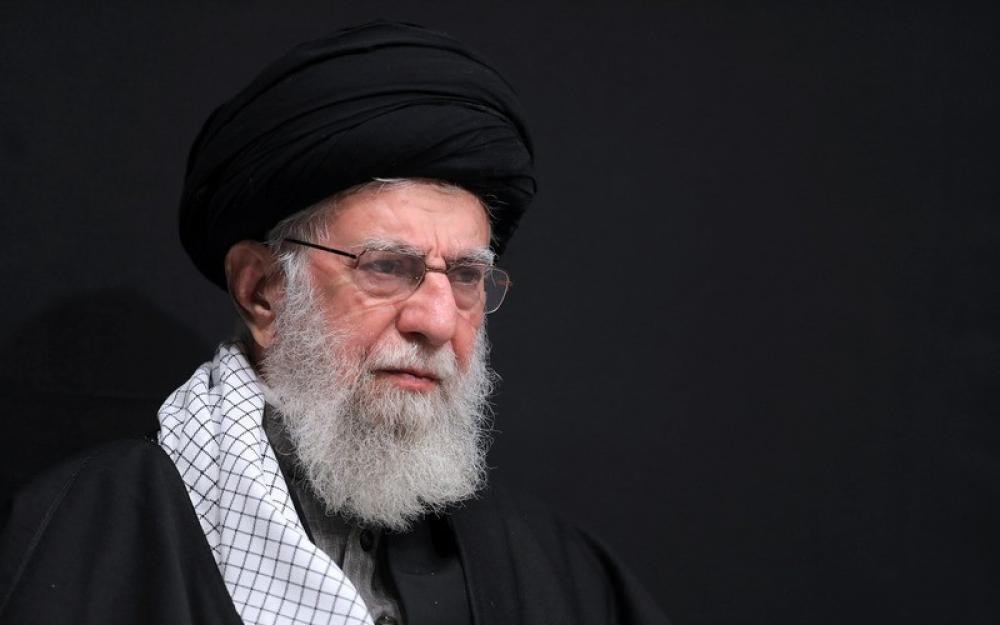
He attended the mourning ceremony on the eve of Ashoura, the holiest day of the Shiite Muslim calendar, which commemorates the death of Prophet Mohammed's grandson, Hussein.
Ayatollah Khamenei attended mourning ceremony held at Imam Khomeini Hussainiya located at his office's compound in downtown Tehran on Saturday night, reported IRNA news agency.
Despite no reference by the state media, some Western media outlets suggested that Khamenei lived in a bunker during the war.
Khamenei is the supreme leader of the nation who makes all decisions in state matters.
It is still not clear whether Khamenei made any public comment during the event.
Iranian top cleric Makarem Shirazi has issued a religious ruling against US President Donald Trump and Israeli PM Benjamin Netanyahu for threatening Supreme Leader Ayatollah Ali Khamenei.
When asked about the action that could be taken against those threatening Ayatollah Ali Khamenei, Shirazi was quoted as saying by The Jerulsalem Post: "It is clear that threatening the life of any person who is a pillar of the Islamic system, the Marja’iyyat (religious authority), and leadership, especially the supreme leader, is forbidden and religiously prohibited."
"It is obligatory to defend them and to confront the perpetrators of such threats, and violating this sanctity is one of the greatest sins," Shirazi said.
"Muslims around the world must stand firm against such enemies and their open crimes. If they [the enemies] carry out such an act, they will face severe and divine punishment, and they will undoubtedly be avenged," he said.
According to The Jerusalem Post, Shirazi used the term Muharrab to describe those who carry out such "open crimes."
The term is often translated into English as "waging war against God," "war against God and the state," or "enmity against God."
Death Penalty Middle Eastern Nation
These crimes carry the death penalty in the Middle Eastern nation.
Iran and Israel were engaged in a massive conflict for 12 days.
The ceasefire put an end to the conflict.