
The government had said on Wednesday that Nepali rescuers were capable of handling the operation and would not permit foreign rescue teams to enter.
बाढी प्रभावित क्षेत्रहरूमा राहत वितरण, खोज तथा उद्धारमा #नेपालीसेना....
— Nepali Army (@NepaliArmyHQ) August 28, 2026
📷 "Together for Life. Together in Hope." #नेपालीसेना !!!#NepaliArmy#BhoteKoshiFlood pic.twitter.com/1cKpRKNjD4
Within a day, however, the administration agreed to seek specialised foreign expertise for tunnel rescues, DNA testing and forensic examinations.
“We received massive pressure from the international community to allow at least search-and-rescue teams and some experts because their citizens have also gone missing in the floods,” a senior government official told the Post.
“We are allowing a limited number of experts in certain areas.”
Over 550 dead, nearly 1,000 missing
The flash floods caused widespread destruction along the Bhotekoshi and Trishuli rivers, with more than 550 people reported dead by Friday and 977 still missing.
Of those missing, 517 are foreigners from 31 countries, according to the latest figures cited from the Nepal Tourism Board.
Indian nationals account for the largest group of missing foreigners at 178, followed by 65 Americans, 53 Ukrainians, 35 Australians and 33 Britons.
The scale of the disaster and the large number of foreign nationals unaccounted for intensified calls for Nepal to accept international assistance.
Four countries get green light
Following an assessment by the National Disaster Management Centre, an inter-ministerial coordination committee has approved assistance from India, China, Australia and South Korea.
The countries will be allowed to send experts and technical teams specialising in tunnel rescue operations, DNA testing and forensic examinations.
बाढी प्रभावित क्षेत्रहरूमा राहत वितरण, खोज तथा उद्धारमा #नेपालीसेना....
— Nepali Army (@NepaliArmyHQ) August 28, 2026
जहाँ संकट, त्यहाँ #नेपालीसेना !!!#NepaliArmy#BhoteKoshiFlood pic.twitter.com/8tQuruM6dj
However, Nepal has not approved similar requests from several other countries that have offered assistance, officials said.
Diplomatic officials from at least two countries with dozens of nationals missing said they had repeatedly asked Kathmandu to allow their teams to help with search operations but had received no positive response.
“Three days have passed with no concrete progress in tracing our people. We are really concerned about them,” one embassy official said.
India offers rescue, medical teams
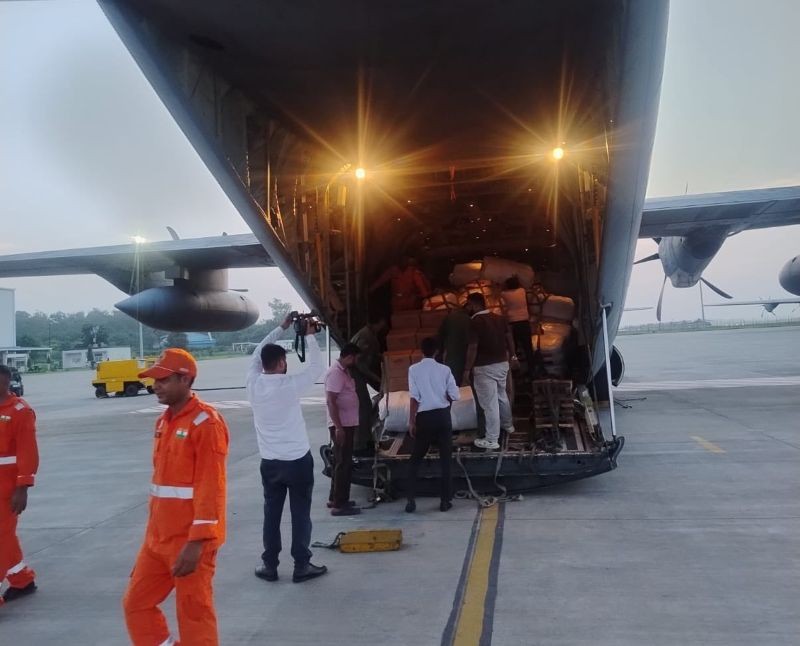
India has publicly offered extensive assistance, including a tunnel rescue team, a medical team and personnel from the National Disaster Response Force, according to MEA spokesperson Randhir Jaiswal.
Indian External Affairs Minister S Jaishankar also spoke with his Nepali counterpart Shisir Khanal on Friday about the disaster.
“We have given them a range of support offers. They are evaluating them,” Jaishankar said in a post on X.
A third flight carrying 10 tonnes of humanitarian assistance has departed for Kathmandu.
— Dr. S. Jaishankar (@DrSJaishankar) August 28, 2026
The assistance includes portable generator sets, dignity kits, food packets and water purification tablets.
An 11-member team of doctors, paramedics & Recce team for Tunnel rescue… pic.twitter.com/PrqCbyoo9D
India's fourth tranche of relief material sent to Nepal also included an 11-member team of doctors, paramedics and tunnel rescue specialists.
Discussed the relief and rescue efforts underway in Nepal today. Our Embassies in Kathmandu & Beijing provided an updated picture in respect of the status and well-being of Indian nationals. The concerned MEA Divisions apprised us of the further relief supplies to be sent to… pic.twitter.com/I8QmbzGilB
— Dr. S. Jaishankar (@DrSJaishankar) August 28, 2026
South Korea presses for access
South Korea has also stepped up its efforts to assist in locating its missing nationals.
South Korean Foreign Minister Cho Hyun spoke with Khanal on Thursday and raised concerns over the safety of South Korean citizens, including nine who remain unaccounted for.
Cho said he had requested Kathmandu's cooperation to allow a Prompt Response Team already dispatched to the disaster zone to carry out search-and-rescue operations. Seoul is also preparing to send its Korea Disaster Relief Team.
Focus on hydropower tunnels
The foreign teams will primarily assist in rescuing people believed to be trapped inside hydropower tunnels in Rasuwa and Nuwakot districts.
Fourteen hydropower projects — eight in Rasuwa and six in Nuwakot — were affected by Wednesday's floods.
The scale of the crisis is particularly severe at several project sites.
At the under-construction 216 MW Upper Trishuli-1 Hydropower Project, 76 Andritz Hydro employees remain unaccounted for, while 51 people at the Rasuwagadhi Hydropower Project and eight employees at the Mailung Khola Hydropower Project are also missing.
Authorities have also been unable to establish contact with 60 people trapped inside a tunnel at the Langtang Khola Hydropower Project. Another 45 technicians, staff and consultants working at the Trishuli-3B Hydropower Project remain out of contact.
जलविद्युत् सुरूङमा फसेकाहरुको उद्धारमा #नेपालीसेना....
— Nepali Army (@NepaliArmyHQ) August 28, 2026
जहाँ संकट, त्यहाँ #नेपालीसेना !!!#NepaliArmy#BhotekoshiFlood pic.twitter.com/PAt30A3fSR
At the Trishuli-3A project, the Nepali Army has rescued several workers, but 35 people are still believed to be inside the tunnel.
Foreign experts to help identify bodies
International assistance will also extend to DNA testing and forensic identification.
Nepal's laboratories have limited capacity to conduct the large number of DNA tests required following the disaster, prompting the government to seek assistance from foreign experts.
The government has maintained that foreign assistance will be accepted only in areas where specialised expertise is urgently required.