
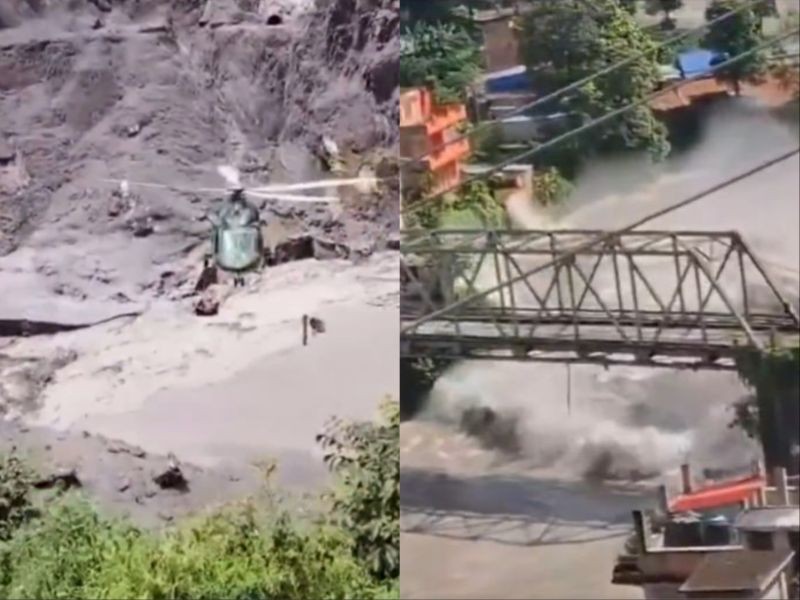
The flash flood hit the Bhotekoshi River region at around 9 am on Wednesday, causing widespread destruction across three districts and leaving a trail of death and devastation. Foreign tourists and pilgrims were among those reported missing.
The powerful floodwaters swept away homes, buildings, vehicles, livestock and public infrastructure, making the disaster one of Nepal's worst in recent years.
Floodwaters devastate districts
Nepali officials said the flood surged downstream after hitting the main market area, sweeping away people, animals and buildings in its path.
Bridges and roads have been damaged, hampering rescue efforts and cutting off several affected areas.
Security forces have stepped up operations using helicopters and ground teams to search for those trapped or missing.
Authorities are providing emergency assistance, including medical aid, temporary shelters, food, drinking water and medicines, to people affected by the disaster.
288 Indians still missing
The disaster has also triggered a major evacuation effort involving Indian nationals.
India's Ministry of External Affairs said 288 Indians remain unaccounted for, while around 200 people undertaking the Kailash Mansarovar Yatra have sought evacuation from the affected region.
The Indian government has also launched relief efforts for flood-hit Nepal, sending two military aircraft carrying 48 tonnes of supplies.
The relief consignment includes solar lamps, hygiene kits and more than eight tonnes of medicines and food supplies.
Rescue efforts continue
Nepal's security forces are continuing search-and-rescue operations despite damaged roads and infrastructure.
Helicopters and ground teams are being deployed to reach isolated areas and evacuate those in need.
Rescue workers are also assessing damage to roads, bridges and other critical infrastructure.
The scale of the destruction has raised concerns about the ability to reach remote communities and account for the large number of people still missing.
Himalayan region faces growing flood risks
The latest disaster has renewed concerns about the increasing vulnerability of communities across the Himalayan region to sudden floods and other climate-related hazards.
Scientists and officials have warned that rising temperatures and changes in the Himalayan ice and glacial systems could increase risks to communities, infrastructure and water supplies across the region.
The area witnessed a similar disaster in August 2025, when a glacial lake in Tibet overflowed amid high temperatures.
Nine people were killed, while critical infrastructure, including a bridge linking Nepal and China, was damaged.