The official text of the agreement was released two days later, following public scrutiny and criticism from political opponents.
Breaking: Pakistan does not quite have press freedom, says US Vice President JD Vance pic.twitter.com/lj3EBMNvBp
— Shashank Mattoo (@MattooShashank) June 20, 2026
Vance points to differences in press freedom
During the discussion, Vance said the delay was linked in part to differing expectations regarding transparency and public access to official documents.
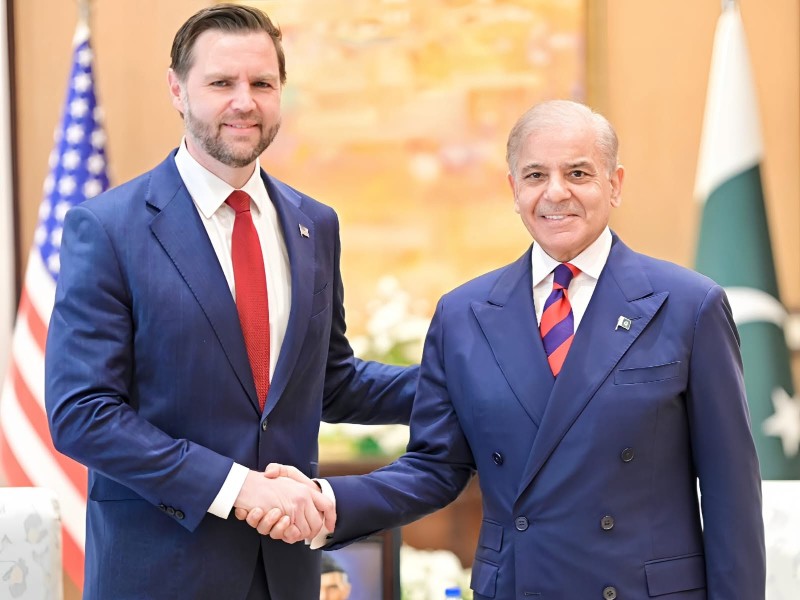
“We actually wanted to get it out. I think part of the misalignment here is that in the Pakistani and Qatari systems, they don't quite have the First Amendment and freedom of the press,” Vance said.
The First Amendment to the US Constitution protects freedom of speech, religion and the press, limiting government interference in those areas.
Vance argued that in the United States, government agreements should be available for public examination.
“And so, there isn't this expectation (in Pakistan) that the text is going to be out there for the American people to actually interrogate and look at and analyse and understand for themselves. But it will be out,” he added.
Agreement released after political pressure
The full text of the US-Iran agreement was eventually published on Wednesday after criticism from Democratic lawmakers and other observers.
Some critics had speculated that the administration was withholding details because the agreement could contain significant concessions to Iran aimed at ending the conflict.
The agreement was negotiated after months of tensions that affected global energy markets and shipping routes, particularly around the strategically important Strait of Hormuz.
Pakistan’s press freedom record back in focus
Vance’s comments have renewed attention on Pakistan’s standing in international press freedom assessments.
Pakistan ranks 153rd out of 180 countries in the World Press Freedom Index, reflecting longstanding concerns about media restrictions and the challenges journalists face.
Media rights groups have frequently highlighted issues including censorship, intimidation and legal pressures affecting reporters and news organisations in the country.
Observers have also pointed to Pakistan’s 27th Constitutional Amendment, passed in November 2025, which altered the Supreme Court’s authority to independently review certain fundamental rights matters.
Diplomatic claims face scrutiny
The controversy comes as Pakistan has sought to highlight its role, alongside Qatar, in facilitating dialogue that contributed to the US-Iran agreement.
Earlier in the week, Prime Minister Shehbaz Sharif described the agreement as a significant diplomatic development and announced that a formal signing ceremony would take place in Switzerland on June 19.
However, the agreement was ultimately signed digitally by President Trump and Iranian President Masoud Pezeshkian on Thursday.
Before the signing, Iran’s Foreign Ministry had already stated that no formal ceremony would be held in Switzerland.
Shari's Switzerland visit cancelled
Following the digital signing of the agreement, references to a Swiss signing ceremony were removed from Sharif’s public statement.
Sharif also cancelled his planned visit to Switzerland.
The developments drew attention because Pakistan had publicly associated itself with the anticipated ceremony as part of its diplomatic engagement surrounding the agreement.