
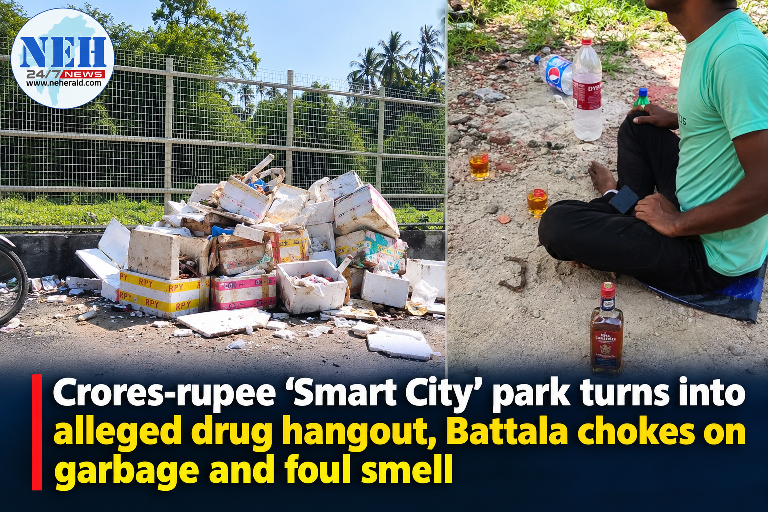
A park developed at a cost of crores of rupees under the Smart City project at Battala in Agartala, which was intended to provide citizens with a clean, attractive and safe public space, is now allegedly struggling with drug abuse, garbage and poor maintenance.
The present condition of the park and its surroundings has raised questions over whether the concept of a “Smart City” has translated into improved civic safety and cleanliness on the ground.
Located beside the busy Battala fish market, the park was developed as part of the Smart City initiative with significant public investment. However, the current condition of the area has left residents questioning whether this is the Smart City environment that was envisioned.
Waste from the fish market, including fish remains, discarded fish boxes and other garbage, can reportedly be seen piled up along the park wall and adjoining areas. The resulting foul smell and unhygienic surroundings are causing considerable inconvenience to the public.
The situation inside the park has also reportedly deteriorated. Garbage and discarded items, including empty liquor bottles, are allegedly scattered at several places.
According to locals, groups gather inside the park for substance abuse after evening hours. This has reportedly created a sense of discomfort and insecurity among visitors, particularly families who wish to use the park.
Serious questions have also been raised over waste management along the road in front of the park and around the fish market.
Despite municipal garbage collection vehicles reportedly being stationed in the area, fish-market waste is allegedly being dumped along the roadside and beside the park wall.
The combination of foul odour, accumulated waste and an unhygienic environment has turned the area into what residents describe as a glaring example of poor civic management rather than the clean and attractive public space promised under the Smart City project.
The park was built with crores of rupees in public money for the benefit of ordinary citizens. However, allegations of substance abuse inside the park, fish-market waste outside and poor cleanliness all around have raised a basic question: Who is actually benefiting from this public facility?
Questions are also being raised over the role of the police, municipal authorities and the Smart City authorities responsible for the park’s maintenance and security.
If such conditions have developed despite the presence of agencies responsible for monitoring and maintaining the facility, residents are asking who should be held accountable for the alleged mismanagement.
Does spending crores of rupees on infrastructure under the Smart City project mark the end of the responsibility? Or does the responsibility also include ensuring that the facility is regularly cleaned, properly maintained, safe and genuinely accessible to the public?
On one hand, crores of rupees have been spent on beautification and infrastructure; while on the other, allegations of substance abuse and garbage accumulation have emerged at the same park.
The situation at Battala has therefore raised fresh questions about the reality of the Smart City initiative on the ground.
The question being asked by citizens is simple: Will the Smart City be “smart” only in terms of beautification, or will civic safety, cleanliness and public amenities also receive equal priority?