
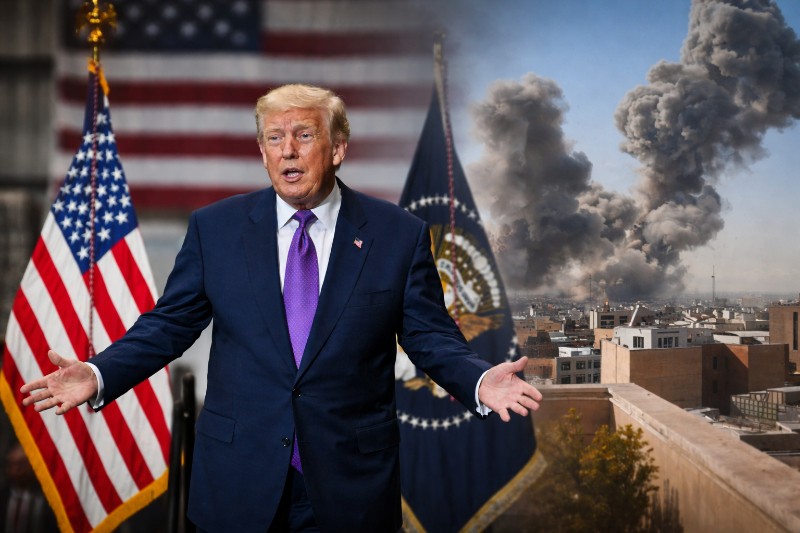
As US airstrikes hammer Iran and the conflict spills across West Asia, President Donald Trump continues to describe the unfolding violence not as a war, but as “major combat operations”.
The distinction is not rhetorical carelessness — it is deliberate, calculated, and rooted in law.
Trump returned to office branding himself as the “candidate of peace”, a leader who promised to end wars rather than ignite new ones.
Throughout the 2024 campaign, he cast himself as the corrective to the conflicts that erupted under his Democratic predecessors, pledging to halt fighting in Gaza and Ukraine through deal-making rather than force.
The peace candidate who chose force
On election night in November 2024, Trump assured supporters that he would not start wars but stop them.
That promise hardened into doctrine during his inauguration, where he vowed that success would be measured not only by victories won, but by wars avoided altogether.
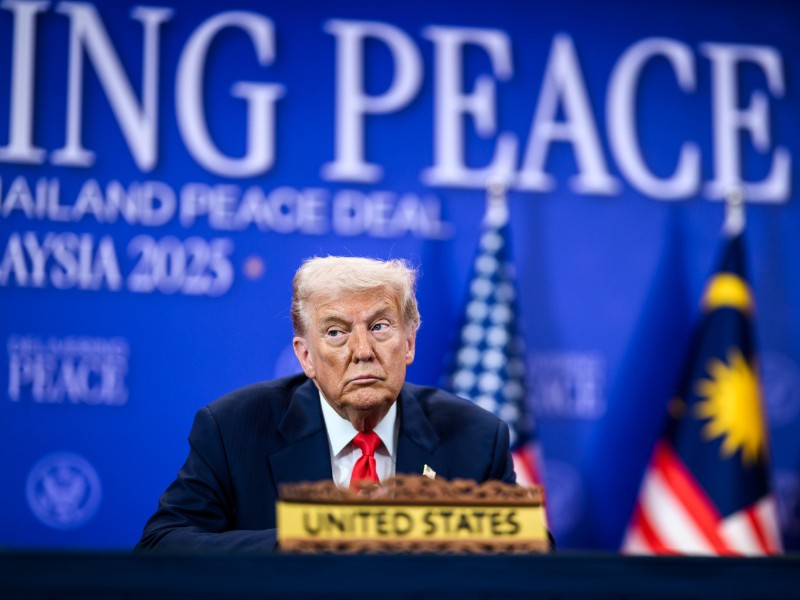 Donald Trump, a self-proclaimed 'candidate of peace', avoids calling the Iran attack a 'war'. Photo: Wikimedia Commons/Flickr/The White House
Republican strategists echoed the message relentlessly. Trump and Vice-President JD Vance were presented as a “pro-peace ticket”, while allies praised Trump’s first-term record of avoiding large-scale conflicts.
Yet reality diverged sharply from rhetoric. Within his first year back in office, Trump authorised strikes in seven countries, including Yemen, Syria and Somalia.
The Iran campaign marked the most extensive and dangerous escalation yet — a joint US-Israeli assault viewed in Tehran as an existential threat to the Islamic Republic.
Announcing war without saying it
Trump announced the Iran strikes in an eight-minute overnight video posted to Truth Social, declaring a “massive and ongoing” campaign aimed at dismantling Iran’s military capacity and toppling its ruling regime.
For a president who built his political brand on opposing foreign entanglements, it was a striking reversal.
The build-up to the attack unfolded over weeks, as the US deployed its largest Middle East military presence since the 2003 Iraq invasion.
Yet Trump offered little public justification to Congress or the American people. Opinion polls showing nearly 70 percent opposition to military action against Iran — including scepticism within his own MAGA base — went largely ignored.
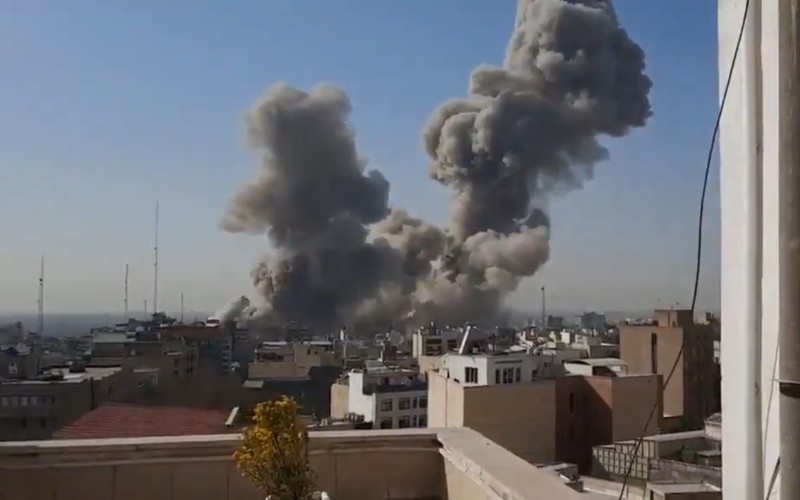 US-Israeli missiles hit a 'target' in Tehran, Iran. Photo: Iranian media
‘Imminent threat’ argument
In his address, Trump repeated long-standing US accusations against Iran, citing its nuclear ambitions, missile development and support for armed groups such as Hezbollah and Hamas.
He framed the strikes as defensive, arguing that Iran posed “imminent threats” to Americans, US bases and allies worldwide.
However, intelligence assessments undercut the urgency of those claims. US agencies have consistently concluded that Iran remains years away from developing missiles capable of reaching American soil.
A 2025 report from Trump’s own Defence Intelligence Agency confirmed that while Iran could theoretically build such weapons by 2035, it currently lacks the capability.
In practical terms, Iran’s missiles and regional proxies pose a far greater danger to Israel than to the United States — a reality complicated by declining American public support for Israel and its leadership.
Nuclear claims under scrutiny
Trump also accused Tehran of reviving its nuclear programme, despite earlier asserting that US strikes had “obliterated” Iran’s facilities during a previous Israel-led conflict.
Subsequent intelligence leaks suggested that key sites sustained less damage than claimed.
Still, in his February State of the Union address, Trump insisted Iran had resumed uranium enrichment, reinforcing his justification for renewed military action.
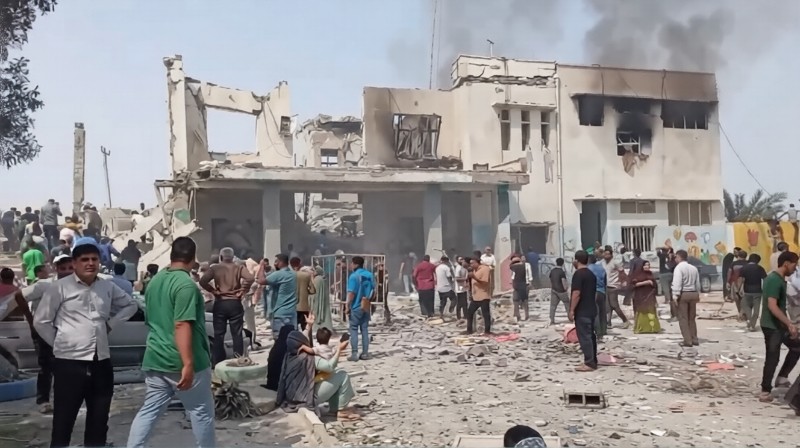 Hundreds killed as a girls' school was hit by a missile during the US-Israeli attack on Iran. Photo: Iranian media
Why Trump avoids the word ‘war’
On February 28, Trump formally announced “major combat operations in Iran”.
Since then, US strikes have devastated Iran’s senior military leadership and expanded the conflict into Saudi Arabia, the UAE and Qatar.
Despite this scale, Trump remains careful with terminology.
The reason lies in the US Constitution.
Article I grants the exclusive power to declare war to the US Congress. Article II, however, designates the president as commander-in-chief, authorising military action short of war to protect national security.
Calling the Iran campaign a “war” would require Congressional approval — a political and legal hurdle Trump has so far avoided.
How war has worked in modern America
The United States has not formally declared war since 1942, when President Franklin D Roosevelt targeted the Axis powers after Pearl Harbour.
Every major conflict since — from Korea to Afghanistan — has proceeded under presidential authority, often retroactively endorsed by Congress.
The 2001 Authorisation for Use of Military Force, passed after the 9/11 attacks, became the legal foundation for wars in Iraq and Afghanistan, illustrating how flexible modern war powers have become.
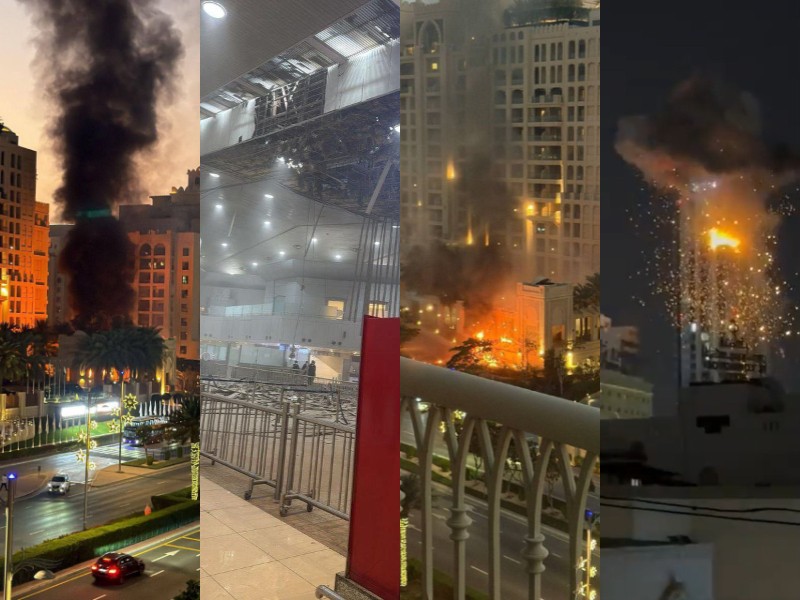 Iran carried out "retaliatory" strikes at multiple locations in the Gulf region. Photos: X
Legal limits and growing pushback
The War Powers Resolution of 1973 attempted to curb presidential overreach by requiring consultation with Congress and mandating withdrawal within 60 days without authorisation.
Trump has historically relied on Article II powers to bypass these constraints, arguing that limited operations do not meet the constitutional threshold of war.
Iran, however, is different. The scale, duration, and stated objective of regime change have triggered bipartisan concern.
Democrats and several Republicans are now demanding a Congressional debate on the legality of the strikes.
Senior Democrats have accused Trump of launching an illegal war, while constitutional experts warn that, absent an imminent threat, the president’s authority may not apply.
A war by any other name
Legally, Trump may continue military operations — but only temporarily.
To sustain them lawfully, his administration must brief Congress and secure authorisation. Until then, semantics matter.
By refusing to label the Iran campaign a war, Trump is not minimising its consequences; he is navigating constitutional boundaries.
In Washington, words are weapons — and “war” is one Trump cannot yet afford to declare.